
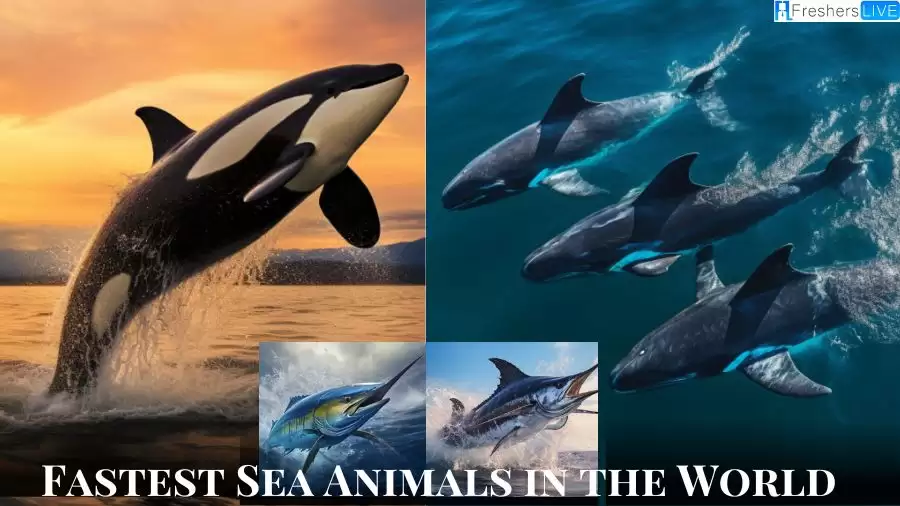
In the vast, mysterious realms of the ocean, a captivating variety of life exists, and some creatures possess an extraordinary ability that enthralls both casual observers and marine biologists alike: speed. The ocean, often regarded as a tranquil expanse, is home to a competitive undercurrent where survival hinges on agility and swiftness. This list explores the top ten fastest sea creatures that showcase nature’s engineering prowess, demonstrating astonishing adaptations developed over millennia. From shimmering fish darting through coral reefs to majestic marine mammals cutting through the waves, these creatures embody the thrill of velocity.
1. Black Marlin
Notorious among sport fishermen, the black marlin is often heralded as the fastest sea creature, capable of reaching speeds up to 82 miles per hour (132 km/h). With its streamlined, torpedo-like body and long, slender bill, it can navigate through water with tremendous efficiency. This incredible fish doesn’t just rely on speed; it employs its acute eyesight to spot prey over vast distances. The black marlin’s graceful but powerful leaps above the surf are not just a spectacle; they are a strategy to disorient schools of fish, making capture a cinch.
2. Sailfish
Following closely in the wake of the black marlin is the sailfish, another marvel of the deep known to exceed speeds of 68 miles per hour (110 km/h). Recognizable by its magnificent dorsal fin and iridescent blue coloring, this fish can modify its speed and direction with remarkable agility. Sailfish are not only swift; they possess a unique hunting style, where they rely on their impressive speed to slice through schools of small fish using their bill, much like a sword. The sheer elegance of their movements leaves observers in awe.
3. Swordfish
With an average speed of approximately 60 miles per hour (97 km/h), the swordfish is another formidable predator in the open ocean. Equipped with its iconic elongated bill, this species uses its speed and sharpness to slash through schools of fish, claiming its place at the top of the marine food chain. Swordfish are capable of tremendous acceleration, allowing them to outmaneuver potential threats and prey alike. They often inhabit deep offshore waters, making encounters with these stealthy hunters infrequent but memorable.
4. Yellowfin Tuna
Yellowfin tuna are not only known for their culinary value but also for their remarkable speed, capable of swimming at speeds up to 50 miles per hour (80 km/h). These streamlined fish utilize their robust muscular build to engage in high-speed pursuits, often traveling long distances in search of food. Known for their powerful and enduring swimming capabilities, they can dive to profound depths, making them incredibly versatile hunters of the open sea. The sight of a yellowfin tuna cutting through the water with precision is a testament to its evolutionary success.
5. Mako Shark
The shortfin mako shark stands out in the underwater kingdom for its impressive bursts of speed, peaking at 45 miles per hour (72 km/h). Characterized by its sleek, torpedo-shaped body and pointed snout, this species is a key predator, capable of explosive acceleration. The mako’s agility allows it to take advantage of swift movements to capture agile prey such as smaller fish and squid. With a remarkable combination of power and grace, the mako shark embodies the ocean’s raw energy.
6. Atlantic Bluefin Tuna
Atlantic bluefin tuna, known for their size and speed, can reach velocities of up to 43 miles per hour (69 km/h). These fish are not only among the fastest but also some of the largest in the ocean, often weighing hundreds of pounds. Their remarkable speed, coupled with robust muscle structure, allows them to make long migrations across vast oceanic expanses. As apex predators, the bluefin tuna plays a crucial role in the marine ecosystem, often patrolling the waters for prey.
7. Flying Fish
Flying fish, while not possessing the same swim speed as other listed contenders, can achieve astonishing speeds of approximately 37 miles per hour (60 km/h) when leaping out of the water. Their unique adaptations allow them to glide over the surface, using their enlarged pectoral fins to soar for considerable distances, sometimes escaping predators in the process. This extraordinary ability to “fly” signifies a remarkable evolutionary strategy, further blurring the lines between aquatic and aerial realms.
8. Common Dolphin
Known for their intelligence and playful behavior, common dolphins can reach speeds of around 40 miles per hour (64 km/h). Their streamlined bodies are perfectly adapted for fast swimming. Social animals, they often form pods, where they demonstrate perpetual playfulness and cooperation while hunting. Their acrobatic displays while riding the bow waves of boats are not just entertaining; they effectively reduce energy expenditure while traveling at speed, showcasing their efficiency and social nature.
9. Orca (Killer Whale)
Despite their size, orcas can swim at impressive speeds of up to 34 miles per hour (56 km/h). These apex predators exhibit a sophisticated understanding of their environment, often using teamwork and speed to hunt. Their remarkable adaptability allows them to target various prey, showcasing their complex social structures and intelligence. The juxtaposition of their immense size with their speed encapsulates the intricate designs of nature’s predatory prowess.
10. Great White Shark
The infamous great white shark rounds out the list, swimming at speeds of about 25 miles per hour (40 km/h). Despite not being the fastest in water, their strategic hunting methods, potent bites, and sheer size make them formidable predators. They have adapted to local environments, stalking larger prey with terrifying efficiency. The tension created in the water when a great white comes into view epitomizes the raw power of nature as these creatures glide through their domain.
As we delve into the astonishing world of marine biology, these swift beings provoke a sense of wonder, challenging our understanding of adaptability in the natural world. Their incredible speeds are not just metrics of excitement; they represent the unique evolutionary journeys that have culminated in these masterful marine athletes. Swimming through the oceans, they continue to inspire human fascination and admiration, as we grasp at understanding the dynamics of survival beneath the waves.






Leave a Comment