
Short Answer
Quentin Tarantino is a cinematic maestro, renowned for his audacious storytelling and unique flair. His films are not merely viewed but experienced. They evoke fervent discussions among cinephiles, generating endless debates over which of his works reign supreme. Do you consider yourself a Tarantino aficionado? Are you brave enough to challenge your cinematic perspectives? Let’s embark on an exhilarating journey through Quentin Tarantino’s top 10 films as ranked by fans—a voyage that might just reshape your understanding of his oeuvre.
10. The Hateful Eight (2015)
In the snowy, claustrophobic atmosphere of a cabin, Tarantino crafts a gripping Western that doubles as a tense whodunit. “The Hateful Eight” showcases a cadre of derelict souls trapped by an avalanche, each harboring secrets and historical grievances. The film’s meticulous dialogue erupts with underlying tension, leading to a cacophony of revelations and betrayals. The ensemble cast, vibrant cinematography, and soaring score by Ennio Morricone unify to create a harrowing tapestry of human malice and survival.
9. Django Unchained (2012)
Set against the backdrop of America’s grotesque history of slavery, “Django Unchained” marries exhilarating action with sharp social commentary. This film is a radical revision of the Western genre, following Django, a freed slave on a quest to rescue his wife. Tarantino deftly intertwines humor with violence, showcasing his trademark dialogue that balances poignancy and absurdity. Christoph Waltz delivers a stellar performance as Dr. King Schultz, while Jamie Foxx embodies the vengeful hero, making every scene electrifying.
8. Once Upon a Time in Hollywood (2019)
In “Once Upon a Time in Hollywood,” Tarantino dives headfirst into a nostalgic ode to the late 1960s. This film transports viewers to a bygone era of Hollywood glitz and grit, revolving around fading TV star Rick Dalton and his devoted stunt double, Cliff Booth. The meticulous attention to detail in set design, music, and cultural references are nothing short of a love letter to early cinema. Through a whimsical narrative, the film explores the intersection of fame, friendship, and the fickle nature of the entertainment industry.
7. Reservoir Dogs (1992)
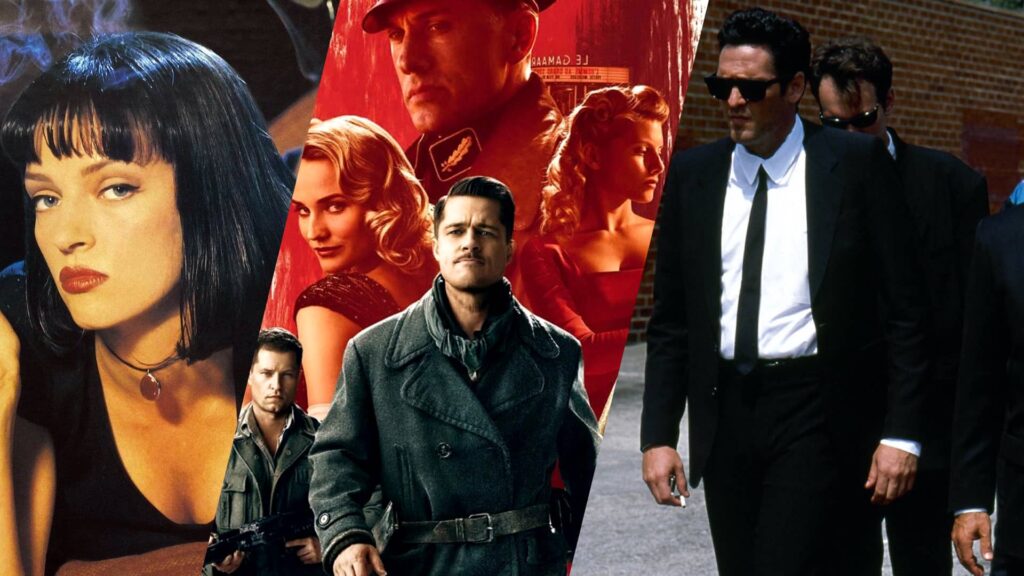
The genesis of Tarantino’s signature style, “Reservoir Dogs,” is a heist film that unfolds in a fragmented chronology. It elevates the ordinary to the extraordinary, showcasing the aftermath of a botched robbery through riveting dialogue and character development. The film’s palpable tension stems from its minimalist setting and non-linear storytelling, reflecting Tarantino’s innovative approach to filmmaking. Iconic performances and the unforgettable ear-cutting scene have left an indelible mark on pop culture, scarred yet intrigued.
6. Kill Bill: Volume 1 (2003)
This audacious film erupts as a vibrant homage to martial arts cinema and revenge sagas. “Kill Bill: Volume 1” follows The Bride, played meticulously by Uma Thurman, on her path of vengeance against her former allies. The film is a visually striking tableau, showcasing choreographed fight scenes that blend artistry with brutality. An eclectic soundtrack, along with Tarantino’s stylistic flourishes, pulls audiences into a world that is simultaneously fantastical and deeply personal, challenging notions of heroism and villainy.
5. Pulp Fiction (1994)
A cultural milestone, “Pulp Fiction” revolutionized independent cinema and altered the landscape of Hollywood. Its interwoven narratives, featuring hitmen Vincent and Jules, exude a rhythmic cadence that is both darkly comedic and gripping. The film excels in character development and entangles various lives through chance and fate. Its pervasive influence is evident in everything from dialogue to cinematography, establishing Tarantino as a luminary of modern film. The quirkiness of its characters and their unforgettable lines become embedded in film history.
4. Inglourious Basterds (2009)
“Inglourious Basterds” reimagines World War II through an audacious lens, celebrating the absurdity of revenge. With a plot that uniquely intertwines fact and fiction, Tarantino delivers a story of justice against the Nazis, featuring unforgettable portrayals by Christoph Waltz and Brad Pitt. The film’s pacing is masterful, with tension building through riveting dialogue and overlapping storylines. That explosive climax in the cinema illustrates how art can intersect with history, leaving audiences exhilarated yet contemplative.
3. Kill Bill: Volume 2 (2004)
The second installment of the “Kill Bill” saga reveals deeper emotional resonance as The Bride’s journey intertwines with themes of redemption and parenthood. Relying more on character development and narrative depth than sheer action, “Kill Bill: Volume 2” captivates with its slow-burn storytelling. Tarantino enriches the film with poignant flashbacks that inform The Bride’s motivations, presenting a rich tapestry of revenge that is as heartbreaking as it is thrilling. The film masterfully contrasts pace, building to a finale that is both cathartic and poignant.
2. Jackie Brown (1997)
Adapting Elmore Leonard’s novel, “Jackie Brown” stands as a nuanced exploration of morality and survival. The film’s layered characters and intricate plot delve into the lives of a flight attendant ensnared in a web of crime and deceit. Pamela Grier shines in the titular role, portraying strength and vulnerability, making her a complex heroine. The film eschews frenetic violence for a more grounded narrative, displaying Tarantino’s versatility as a director while seamlessly blending genres to create a stylish crime drama.
1. The Bride’s Revenge: Kill Bill Collection
Encompassing both “Volume 1” and “Volume 2,” the complete “Kill Bill” narrative emerges as Tarantino’s magnum opus. The juxtaposition of vivid action sequences with profound explorations of love and betrayal solidifies its impact. As fans revel in The Bride’s quest for vengeance, the series transcends typical genre conventions, presenting a rollercoaster of emotion and aesthetics unmatched in modern cinema. It invites viewers to reflect on themes of power, autonomy, and the cyclical nature of revenge, securing its place as Tarantino’s crowning achievement.
As you traverse through the cinematic universe of Quentin Tarantino, have your rankings changed? Which film resonates with you the most, and what would you add or subtract from this list? The beauty of Tarantino’s work lies in its ability to ignite conversation and challenge perceptions. Dive into the dialogue, take on the challenge, and celebrate the brilliance of one of cinema’s most distinctive voices.
FAQ
Which Quentin Tarantino movie is ranked number one by fans?
The number one ranked Quentin Tarantino movie by fans is the complete Kill Bill Collection, which includes both Volume 1 and Volume 2.
What themes are commonly explored in Quentin Tarantino's films?
Common themes in Tarantino's films include revenge, morality, redemption, violence, and the blending of humor with tragedy.
What is unique about Quentin Tarantino's storytelling style?
Tarantino is known for his non-linear storytelling, sharp dialogue, and blending of genres, creating films with rich character development and cultural references.
Are the rankings based on critics or fan opinions?
The article ranks Quentin Tarantino's movies based on fan opinions and their popularity among cinephiles.




Leave a Reply