
Short Answer
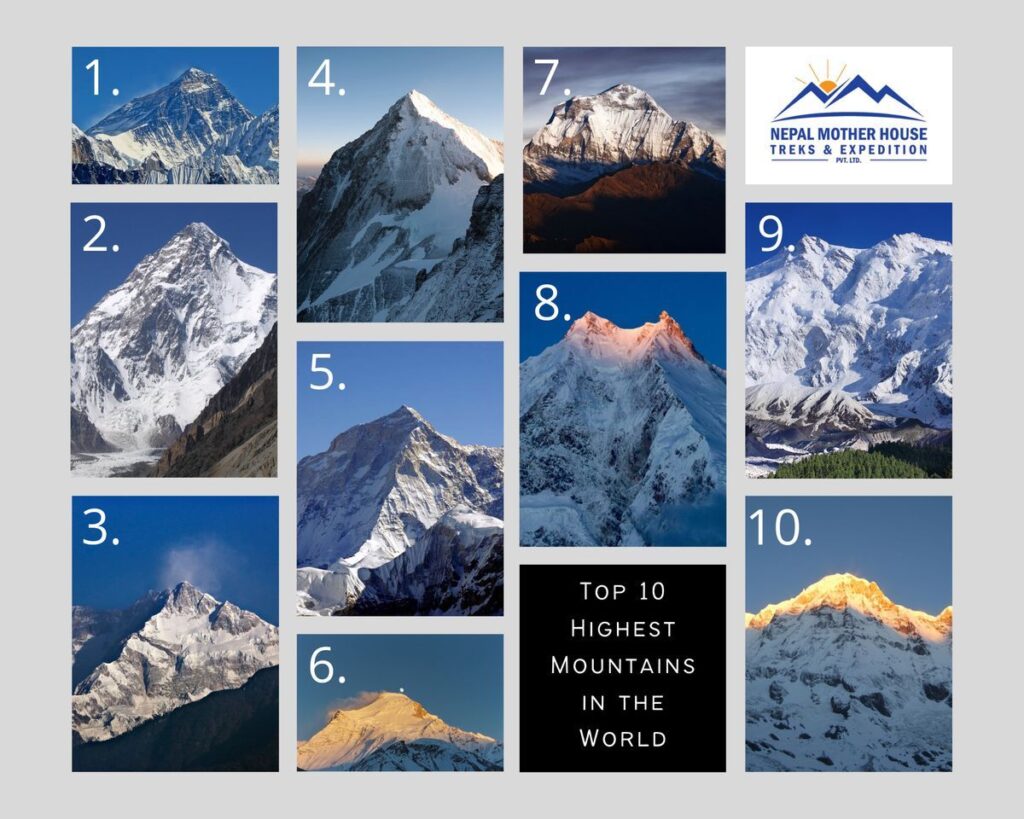
Think you have what it takes to conquer the tallest peaks on Earth? Before you gear up for that extreme mountain adventure, let’s take a moment to explore the most awe-inspiring giants nature has to offer. These towering titans don’t just dominate the skyline—they present a true test of endurance, skill, and courage. Ready to size up these jaw-dropping heights? Here are the top 10 highest mountains in the world.
1. Mount Everest (8,848.86 meters / 29,031.7 feet)
The undisputed king of all mountains, Mount Everest stands proudly on the border between Nepal and China. Everest is the tallest peak on the planet, drawing climbers from every corner of the globe eager to reach its summit. The challenge? Oxygen levels are perilously low, and weather conditions can change dramatically in minutes, making it a true test for even the most seasoned alpinists.
2. K2 (8,611 meters / 28,251 feet)
Known as the “Savage Mountain,” K2 is located on the China-Pakistan border and is considered one of the most difficult and dangerous mountains to climb. Its steep, icy slopes and unpredictable weather pose extreme challenges that have claimed many climbers’ lives. If Everest is the tallest, K2 is often viewed as the toughest.
3. Kangchenjunga (8,586 meters / 28,169 feet)
Straddling the border between Nepal and India, Kangchenjunga is the third highest mountain on Earth. Revered in local culture, it is not only a majestic peak but also one cloaked in spiritual significance. The mountain’s remote location and avalanche-prone terrain add extra hurdles for those daring enough to approach its summit.
4. Lhotse (8,516 meters / 27,940 feet)
Neighboring Everest, Lhotse often gets overshadowed but is remarkable in its own right. The mountain shares much of Everest’s climbing route, yet its steep walls and tricky rock faces require exceptional technical skill. The close proximity to Everest brings a unique appeal and challenge to climbers.
5. Makalu (8,485 meters / 27,838 feet)
Another Himalayan giant near Everest, Makalu is known for its pyramid shape and sharp ridges. Situated on the Nepal-China border, this peak demands a blend of rock climbing and ice climbing expertise. It’s less crowded but notoriously challenging due to its isolated location and technical complexity.
6. Cho Oyu (8,188 meters / 26,864 feet)
Often considered the “easiest” eight-thousander, Cho Oyu lies on the border of Nepal and Tibet. Its relatively moderate slopes attract many climbers as a stepping stone for higher peaks, but don’t be fooled—altitude sickness and extreme weather remain critical threats.
7. Dhaulagiri I (8,167 meters / 26,795 feet)
Meaning “White Mountain” in Sanskrit, Dhaulagiri is renowned for its massive size and dramatic snow-covered slopes. Located entirely within Nepal, it has been the site of many mountaineering milestones but continues to pose risks, such as avalanches and crevasses, that test climbers’ resolve.
8. Manaslu (8,163 meters / 26,781 feet)
Another Himalayan marvel located in Nepal, Manaslu translates as “Mountain of the Spirit.” It offers a perfect mix of natural beauty and climbing challenge. The routes are less trafficked but involve complex glacier crossings and unpredictable weather.
9. Nanga Parbat (8,126 meters / 26,660 feet)
Known as the “Killer Mountain” in Pakistan, Nanga Parbat is notorious for its treacherous terrain and high fatality rate among climbers. Its massive vertical relief and frequent avalanches make summiting one of the harshest endurance challenges in the mountaineering world.
10. Annapurna I (8,091 meters / 26,545 feet)
Rounding out the top ten, Annapurna I is a Himalayan titan in Nepal that is both beautiful and deadly. It has one of the highest fatality rates of all the eight-thousanders, primarily due to unstable weather and massive avalanche zones. Climbing Annapurna demands not just skill but a hefty dose of luck.
FAQ
Which mountain is called the "Savage Mountain"?
K2 is known as the "Savage Mountain" due to its extreme difficulty and danger.
What factors contribute to the danger of climbing these mountains?
Factors include extreme weather, low oxygen levels, avalanches, crevasses, steep slopes, and technical climbing challenges.
What is an eight-thousander?
An eight-thousander is a mountain peak that exceeds 8,000 meters (26,247 feet) in elevation.





Leave a Reply