
Short Answer
The OWASP Top 10 is an essential resource highlighting the most critical security risks to web applications. Updated periodically to reflect changes in the threat landscape, the 2021–2025 version brings new insights and priorities for developers, security professionals, and organizations. This simplified guide explains the ten key vulnerabilities in the OWASP Top 10, helping readers understand their nature and the importance of addressing them. These items are crucial for anyone involved in software development or security to grasp and mitigate common risks effectively.
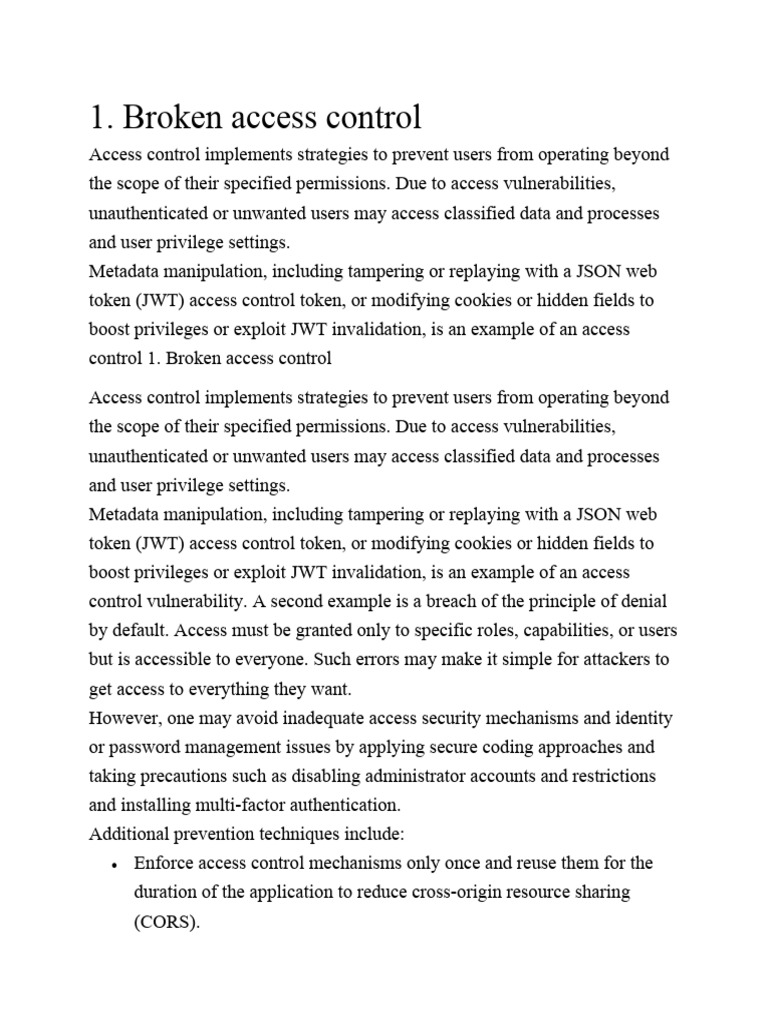
1. Broken Access Control
Broken Access Control occurs when users can act outside of their intended permissions. This vulnerability allows attackers to access unauthorized data or functions, such as viewing other users’ accounts or escalating privileges. Preventing it requires rigorous enforcement of roles and access policies across the application.
2. Cryptographic Failures
Formerly known as Sensitive Data Exposure, this category centers on the incorrect implementation of cryptography. It includes weak encryption, lack of encryption, or poor key management, leading to data breaches or data integrity violations. Proper use of strong cryptographic algorithms and secure key storage is critical to protect sensitive information.
3. Injection
Injection flaws, including SQL, NoSQL, OS, and LDAP injections, happen when malicious data is sent to an interpreter as part of a command or query. Attackers can manipulate these inputs to execute unintended commands or access data. Input validation and prepared statements are essential countermeasures.
4. Insecure Design
This new entry emphasizes the need for secure design principles from the initial stages of software development. It highlights architectural and design flaws that can lead to security weaknesses, such as lack of threat modeling, missing security controls, or flawed business logic. Building security into the design phase helps avoid costly fixes later.
5. Security Misconfiguration
Security misconfiguration involves improper configuration of security settings in the application, platform, or infrastructure. Common examples include default credentials, verbose error messages, or unnecessary features left enabled. Regular configuration reviews and automation can minimize risks.
6. Vulnerable and Outdated Components
Unpatched or outdated libraries, frameworks, and modules can introduce known vulnerabilities that attackers exploit. Keeping software dependencies updated and regularly scanning for vulnerabilities are best practices to mitigate this risk.
7. Identification and Authentication Failures
Previously known as Broken Authentication, this area focuses on weaknesses in user authentication and session management. Flaws like weak passwords, session fixation, or failure to protect credentials allow attackers to impersonate users. Strong authentication mechanisms including multi-factor authentication are recommended.
8. Software and Data Integrity Failures
This category relates to flaws that compromise the integrity of software and data in transit or at rest. Examples include unverified updates, insecure deserialization, or dependency tampering. Ensuring integrity through code signing, checksums, and secure serialization helps protect applications.
9. Security Logging and Monitoring Failures
Lack of proper security logging and monitoring can delay or prevent the detection of breaches. Without sufficient logs, response efforts are hindered. Implementing comprehensive logging, monitoring, and alerting systems ensures timely detection and mitigation of security incidents.
10. Server-Side Request Forgery (SSRF)
SSRF vulnerabilities occur when a server fetches resources based on user-supplied input, enabling attackers to make unauthorized requests within an organization’s internal network. Proper validation of URLs and restricting outbound requests limit the impact of SSRF attacks.
FAQ
What is the OWASP Top 10?
The OWASP Top 10 is a list of the most critical security risks to web applications, published by the Open Web Application Security Project, updated periodically to reflect evolving threats.
Why is the OWASP Top 10 important for developers?
It helps developers understand common web application vulnerabilities, enabling them to design and implement more secure software.
What are some examples of vulnerabilities in the OWASP Top 10?
Examples include Broken Access Control, Injection flaws, Cryptographic Failures, and Server-Side Request Forgery (SSRF).
How often is the OWASP Top 10 updated?
The OWASP Top 10 is typically updated every three to four years to reflect the latest security threats and trends.
How can organizations mitigate risks listed in the OWASP Top 10?
By implementing secure coding practices, regular security testing, updating components, enforcing strong authentication, and monitoring systems continuously.





Leave a Reply