
Short Answer
The A-10 Thunderbolt II, commonly known as the Warthog, is an aircraft that has captured the attention of aviation enthusiasts and military buffs alike. Viewed from above, its distinctive shape immediately stands out among other fighter jets and attack aircraft. This top-down perspective highlights features that contribute to the plane’s iconic status and reveals why it continues to fascinate observers decades after its introduction. Below are several reasons why the A-10 Warthog’s top view is so recognizable and why this perspective unveils deeper insights into what makes this aircraft uniquely effective.
1. Distinctive Twin Engine Pods
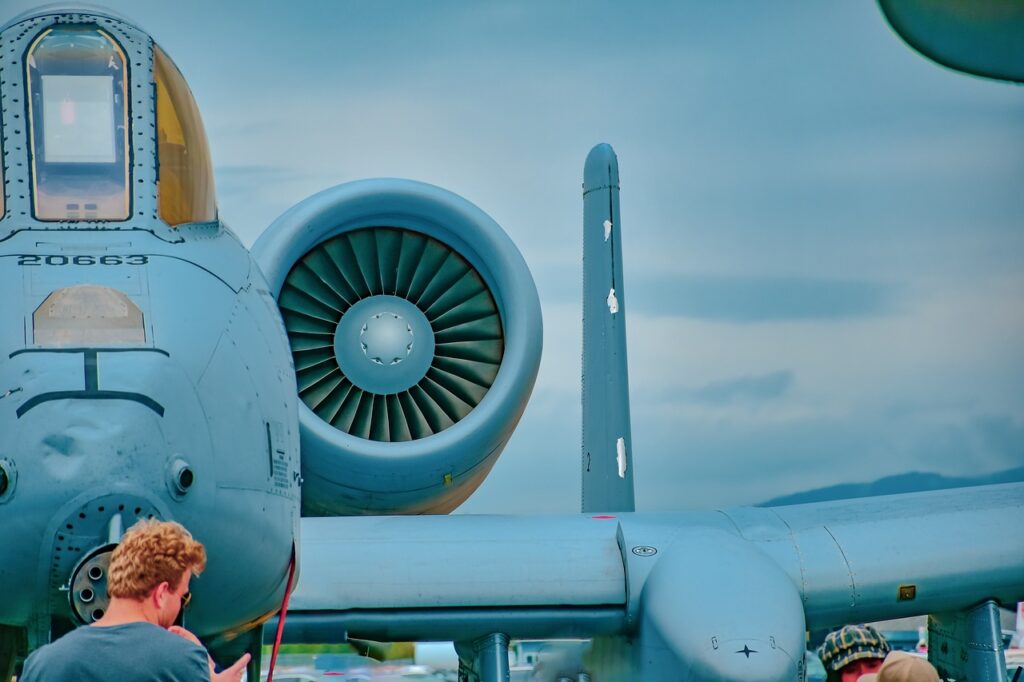
The A-10’s twin engines sit high and wide on the rear fuselage, clearly visible from above. This unusual placement ensures engine survivability and reduces vulnerability to ground fire. The symmetry of these pods enhances the aircraft’s broad and rugged appearance, reinforcing its reputation as a tough, battle-hardened workhorse.
2. Straight, Thick Wings
The Warthog’s wings are thick and relatively straight, instead of being sharply swept like those of many modern fighter jets. From the top, this wing design suggests stability and strength, critical attributes for the close air support role the aircraft fulfills. The robustness is not just visual but functional, allowing for heavy armament and slow, controlled flight.
3. Large, Durable Landing Gear Pods
Visible on the underside but hinted at from the top view, the landing gear doors and pods appear large and sturdy. This robust gear design is meant to absorb rough landings from austere airfields, and its substantial size contributes to the broad silhouette observed from above.
4. Wide Fuselage Filled with Armor
The aircraft’s top view reveals a thick fuselage designed to house a titanium “bathtub” cockpit armor. This heavy armor adds to the width and bulk from above, underscoring the Warthog’s role as a survivable platform meant to operate under heavy enemy fire.
5. Straight, Boxy Tailplane
The twin vertical stabilizers and horizontal tailplanes are clearly seen from on high. Their straightforward, boxy design complements the overall utilitarian aesthetic. Unlike sleek, stealthy aircraft, the A-10’s tail design reflects its function-first engineering.
6. Cannon Placement in Nose
While the GAU-8 Avenger cannon itself is not fully visible from the top, the large bulge in the nose section hints at the massive weapon housed there. This cannon is a defining feature of the Warthog and gives context to the aircraft’s top profile.
7. External Hardpoints Clearly Visible
From above, one can see multiple hardpoints along the wings where missiles, bombs, and ancillary pods attach. The sheer number and spacing of these points betray the aircraft’s payload capacity and mission versatility, factors that enhance its iconic reputation.
8. Heavy Wing Leading Edges
The thick leading edges of the wings, visible from above, function to protect the aircraft from debris and small arms fire during low-level flight. This feature draws attention to the aircraft’s low-altitude battle environment and its rugged design philosophy.
9. Camouflage Paint Pattern
The distinctive gray and green camouflage colors, especially seen across the wings and fuselage from the top, echo the aircraft’s ground-attack role. The patterns often mimic the terrain, which adds a layer of tactical subtlety to the otherwise imposing silhouette.
10. Compact, Efficient Use of Space
Despite its bulk, the A-10’s top view reveals a compact and efficient use of space, from the placement of engines to control surfaces. The aircraft’s design balances durability with maneuverability, a combination clearly mapped out from this angle.
11. Unique Intake Design
From above, the elliptical engine intakes located behind the cockpit are distinctive compared to other aircraft. This feature contributes both to the Warthog’s unmistakable outline and optimized air intake for its twin engines, increasing operational reliability in various combat environments.
12. Clear Control Surface Differentiation
The top angle clearly displays ailerons, flaps, and elevator control surfaces in a straightforward layout. This reflects the straightforward, no-nonsense engineering of the Warthog—prioritizing function over form.
13. Bulky Wing-Fuselage Junction
The area where the wings connect to the fuselage is broad and reinforced, visible as a thickened region from above. This feature supports heavy weapon loads and the stresses of low-speed maneuvering, underscoring the ruggedness that defines the aircraft.
14. Distinctive Leading Edge Extensions
Small extensions along the leading edge ahead of the wings are noticeable from the top view. These help improve aerodynamics and stall characteristics at low speeds, highlighting the design’s focus on close air support performance.
15. Iconic Silhouette Recognized Worldwide
The culmination of these design elements gives the A-10 its unmistakable silhouette. This profile, often seen from reconnaissance or friendly aircraft, evokes an image of resilience, firepower, and reliability—the core reasons the Warthog has achieved iconic status.
FAQ
What makes the A-10 Warthog's top view unique?
Its twin engines, thick wings, broad fuselage with heavy armor, and visible external hardpoints create a distinctive and iconic silhouette.
Why does the A-10 have twin engines mounted high on the fuselage?
To protect the engines from ground fire and increase survivability during combat missions.
How does the A-10's design support close air support missions?
The aircraft's durability, heavy armor, powerful cannon, and ability to carry diverse weapons allow it to effectively support ground troops in hostile environments.






Leave a Reply