
Short Answer
When we delve into the depths of our planet’s biodiversity, we often stumble upon creations so peculiar that they defy our understanding of the natural world. From the eerie glow of bioluminescent organisms to the astonishing adaptations of land and sea creatures, the strangest animals evoke a sense of wonder and whimsy. Are you ready to embark on a journey to meet ten of the most bizarre creatures that have ever been discovered? Prepare yourself for a playful challenge: can you imagine how these oddities thrive in the wild? Let’s dive into the wonders of nature!
1. Aye-Aye (Daubentonia madagascariensis)
With a chimerical blend of exaggerated features, the aye-aye is a nocturnal primate indigenous to Madagascar. Its most striking characteristic is its elongated middle finger, which it uses to tap on trees to locate insects beneath the bark. This method of foraging, known as percussive foraging, invites a bewitching image of the animal conducting an orchestra in its forested habitat. While its appearance may induce unease, it plays an essential role in its ecosystem by helping to control insect populations.
2. Goblin Shark (Mitsukurina owstoni)
The goblin shark exudes an aura of the otherworldly, with its protruding jaw and pinkish skin that thrives in the dark depths of the ocean. This elusive species, often referred to as a “living fossil,” has a unique jaw that can extend outward to snatch prey with alarming rapidity. Encountering this creature is akin to peering through a portal into the Mesozoic Era. As you ponder its existence, consider what adaptations allow it to camouflage within the depths of the sea!
3. Naked Mole-Rat (Heterocephalus glaber)
Defying all conventions of mammalian beauty, the naked mole-rat is remarkably hairless and possesses a strikingly wrinkled appearance. Beyond its aesthetic quirks, this subterranean dweller exhibits fascinating social structures reminiscent of insect colonies. Marrying traits of rodents and social insects, it has developed a remarkable resistance to cancer and the ability to survive in low-oxygen environments. Can you envision a world where these little creatures reign supreme beneath the Earth’s surface?
4. Axolotl (Ambystoma mexicanum)
This whimsical amphibian captivates hearts with its endearing smile and feathery gills. The axolotl, often fancifully dubbed the “Mexican walking fish,” intriguingly retains its juvenile features into adulthood through a process called neoteny. Not only is it a marvel of evolution, but it also possesses the extraordinary capability to regenerate lost limbs. Imagine a world where you could regenerate injured body parts, akin to the mythical phoenix rising from its ashes!
5. Saiga Antelope (Saiga tatarica)
With its extraordinary bulbous nose, the saiga antelope boasts one of nature’s most unique adaptations. This quirky bovine inhabits the steppes of Central Asia and has evolved its nose to filter out dust and regulate body temperature during extreme weather conditions. Moving gracefully in herds, these majestic creatures mirror the essence of survival through their sheer resilience and adaptability. Picture the saiga frolicking across the arid planes—how do they navigate such vast landscapes with such an awkward yet endearing appearance?
6. Blobfish (Psychrolutes marcidus)
The blobfish is often crowned the world’s ugliest animal, a title it earns with its gelatinous, droopy form. Found in the depths of the Tasman Sea, this fish adapts to its extreme environment with a body that is primarily composed of a gelatinous substance, allowing it to float just above the ocean floor without expending energy. As strange as it looks, it serves as a reminder of the wonders of evolution in inhospitable environments. How do you think this peculiar creature views the world around it, nestled at such depths?
7. Orangutan (Pongo)
While orangutans are not inherently strange, their exceptional intelligence and arboreal lifestyle set them apart in the animal kingdom. These brilliant primates have been observed using tools, exhibiting problem-solving capabilities reminiscent of human innovation. With their long arms and dexterous hands, they navigate their rainforest habitat with uncanny grace. Picture a world where these wise beings share secrets of the forest—what wisdom could they impart to us about co-existing with nature?
8. Pygmy Marmoset (Cebuella pygmaea)
The pygmy marmoset, the smallest monkey in the world, weighs in at a mere four ounces and measures about five inches in length. With big, expressive eyes and a spirited demeanor, these pocket-sized primates thrive in the rainforest canopies of South America. Their diminutive stature and spirited antics forge a poignant connection to the fragility of existence. As you envision these lively creatures flitting among the branches, how might their tiny world differ from our expansive one?
9. Tarsier (Tarsiidae)
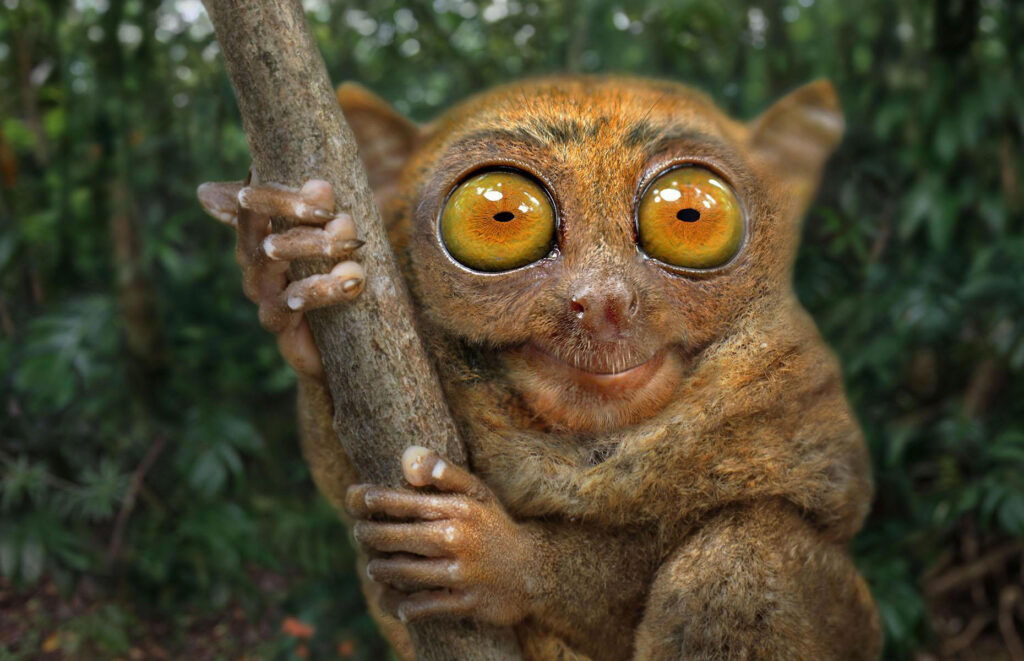
With bulging eyes that appear disproportionately large for its small body, the tarsier is a nocturnal primate whose head can rotate a remarkable 180 degrees. This extraordinary visual capability allows it to survey its surroundings in near-total darkness. Found in Southeast Asia, tarsiers are often overlooked in favor of their larger, more popular primate relatives. Dive into their night-time forest habitat and envision the extraordinary lives they lead—what might their social structures reveal about communication in the animal realm?
10. Walking Catfish (Clarias batrachus)
The walking catfish has a striking ability to traverse land by utilizing its pectoral fins as limbs. This freshwater fish is native to Southeast Asia and can survive out of water for extended periods, enabling it to migrate between freshwater pools during dry seasons. Imagine encountering this fish ambling along the ground, as if it’s on a casual stroll rather than exploring a new habitat. What other surprising adaptations might allow species to defy environmental challenges?
In our exploration of these ten bizarre animals, we are reminded of nature’s endless creativity and the marvels it beholds. Each creature exemplifies how life can flourish in the most unexpected ways. So, as we reflect on the kooky and incredible adaptations found in the animal kingdom, the challenge remains: how will we ensure these remarkable beings continue to thrive in our rapidly changing world? The journey of discovery continues, inviting us to tread lightly and appreciate the extraordinary tapestry of life that surrounds us.
FAQ
What are some examples of strange animals featured in the article?
Examples include the aye-aye with its elongated middle finger, the goblin shark with its protruding jaw, the regenerating axolotl, and the walking catfish that can move on land.
How do these animals adapt to their environments?
They exhibit unique adaptations like bioluminescence, specialized foraging methods, limb regeneration, and survival in extreme conditions such as low oxygen or deep ocean pressure.
Are these strange animals endangered?
Many of these species face threats from habitat loss and environmental changes, making conservation efforts vital for their continued survival.





Leave a Reply