
Short Answer
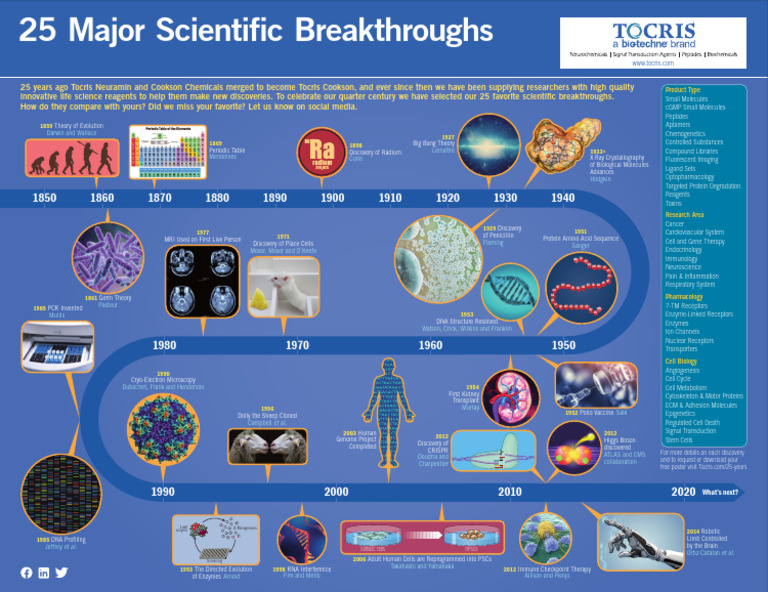
Throughout history, scientific breakthroughs have radically transformed our understanding of the natural world and have led to monumental advancements in technology, health, and society. From the early principles of physics to the intricacies of genetics, these discoveries not only illuminate our past but also pave the way for future innovations. This article delves into the top ten scientific breakthroughs that have significantly shaped human civilization.
1. The Theory of Relativity
Proposed by Albert Einstein in the early 20th century, the theory of relativity includes two distinct theories: the special and general theories of relativity. The former, introduced in 1905, revolutionized the understanding of space, time, and energy, asserting that the laws of physics hold true for all observers, regardless of their relative motion. The general theory, published in 1915, expanded on these ideas, describing gravity as the curvature of space-time caused by mass. This groundbreaking concept transformed astrophysics and has been essential for technologies such as GPS, which depend on precise measurements of time and space.
2. The Structure of DNA
The elucidation of the double helix structure of DNA by James Watson and Francis Crick in 1953 marked a pivotal moment in biological science. This discovery unveiled the molecular basis of heredity, cellular function, and the intricate mechanisms of life itself. Understanding DNA’s structure has paved the way for advances in genetics, biotechnology, and medicine, including the ability to manipulate genes and develop therapies for a myriad of genetic disorders.
3. The Germ Theory of Disease
In the 19th century, scientists such as Louis Pasteur and Robert Koch profoundly shifted the medical field with the germ theory of disease. They demonstrated that microorganisms, or pathogens, are the causative agents of many infectious diseases. This paradigm not only advanced medical hygiene practices but also laid the groundwork for modern bacteriology, immunology, and the development of vaccines that have salvaged countless lives globally.
4. The Theory of Evolution
Proposed by Charles Darwin and expanded upon in his seminal work, “On the Origin of Species” (1859), the theory of evolution explains the processes of natural selection and adaptation. This transformative idea provides a unifying framework for the biological sciences, explaining the diversity of life and the interconnectedness of species. The implications of evolution extend beyond biology, influencing fields such as psychology, sociology, and anthropology, reshaping our understanding of human behavior and societal development.
5. Pasteurization
Louis Pasteur’s development of the pasteurization process in the 1860s revolutionized food safety and public health. By heating liquids to eliminate harmful bacteria without compromising taste or quality, pasteurization has been instrumental in preventing foodborne illnesses. This practice not only enhanced the safety of milk and various beverages but has also influenced the preservation methods of numerous food items, underscoring the importance of microbiology in everyday life.
6. Quantum Mechanics
In the early 20th century, physicists like Max Planck and Niels Bohr introduced quantum mechanics, fundamentally altering the landscape of physics. This framework elucidates the behavior of matter and energy at the atomic and subatomic levels. Quantum mechanics has led to groundbreaking advancements, including the development of semiconductors, lasers, and quantum computing, which promise to revolutionize industries and enhance computational capabilities beyond classical limits.
7. Antibiotics
The accidental discovery of penicillin by Alexander Fleming in 1928 heralded the antibiotic era, fundamentally transforming medicine. Antibiotics have proved crucial in treating bacterial infections and have drastically reduced mortality rates from infectious diseases. This scientific breakthrough not only revolutionized surgery and healthcare practices but also catalyzed the development of numerous other antibiotics, granting humanity powerful tools in the ongoing battle against bacterial pathogens.
8. The Internet
While initially designed for military communication, the internet has morphed into an integral part of modern existence since the late 20th century. The establishment of protocols for information exchange revolutionized communication, commerce, and education on a global scale. Today, the internet serves as an unprecedented repository of knowledge, a platform for social interaction, and a catalyst for economic transformation, reshaping how we connect and share information.
9. Vaccination
The pioneering work of Edward Jenner in the late 18th century with the smallpox vaccine laid the groundwork for immunization as a means to control infectious diseases. This scientific breakthrough initiated a profound paradigm shift in public health, leading to the eventual eradication of smallpox and significantly reducing the prevalence of other contagious diseases. Vaccination strategies continue to evolve, proving critical in managing public health challenges globally.
10. The Higgs Boson
In 2012, scientists at CERN announced the discovery of the Higgs boson, a particle that provides a mechanism for mass acquisition in elementary particles, crucial for understanding the Standard Model of particle physics. The confirmation of the Higgs boson was not just an academic milestone; it represented decades of intricate research and experimentation, pushing the boundaries of human knowledge about the universe. This breakthrough holds implications for cosmology and the fundamental laws governing matter, energy, and their interactions.
In conclusion, the journey of scientific discovery is woven with moments of enlightenment that have shaped human understanding and innovation. From the vast cosmos to the microscopic realm, these breakthroughs have provided insights that intertwine with our everyday lives. As we navigate the complexities of modern existence, reflecting on these scientific milestones reminds us of the immense potential of human ingenuity and the continuous quest for knowledge that defines our species.
FAQ
What is considered the most important scientific breakthrough in history?
There is no single most important breakthrough, but notable ones include the theory of relativity, the discovery of DNA’s structure, and the development of antibiotics.
Who discovered the structure of DNA?
James Watson and Francis Crick are credited with discovering the double helix structure of DNA in 1953.
How has the theory of relativity impacted modern technology?
The theory of relativity has been essential for technologies such as GPS, which rely on precise measurements of space and time.
Why is vaccination considered a major scientific breakthrough?
Vaccination has led to the control and eradication of many infectious diseases, significantly improving public health worldwide.






Leave a Reply