
Short Answer
Wealth has a way of weaving itself into the fabric of society, often dictating influence, shaping policies, and igniting fierce debates about equality and privilege. When we peer into the lives of the richest families around the globe, we witness not just astounding financial empires but also legacies filled with ambition, innovation, and, at times, controversy. This article invites you to delve deeper into the world’s ten wealthiest families, examining their vast fortunes and the stories behind them. Prepare to challenge your understanding of wealth, influence, and the dynamics of modern-day capitalism.
1. The House of Saud
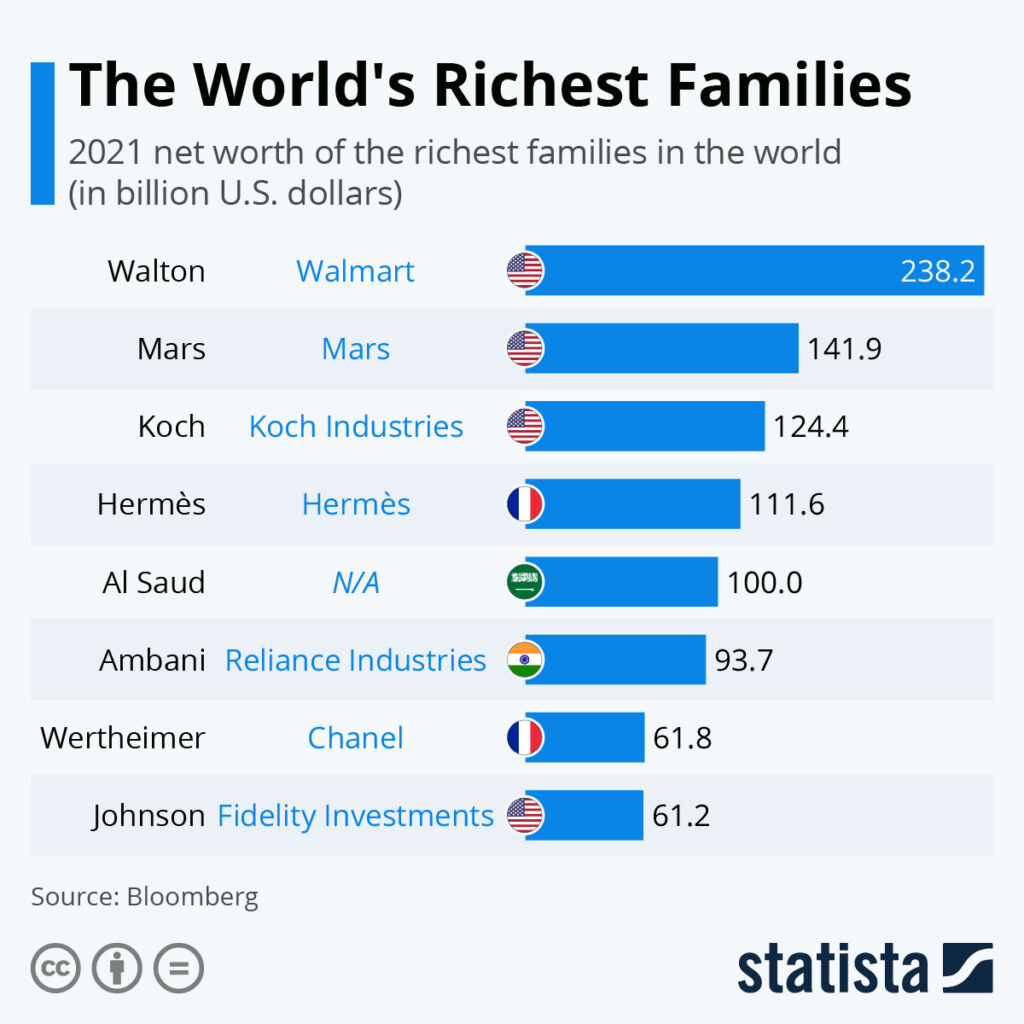
At the pinnacle of wealth, the House of Saud reigns supreme with an estimated fortune exceeding hundreds of billions. As the ruling family of Saudi Arabia, they have amassed wealth primarily from oil exports, benefitting enormously from the petroleum boom. The family’s beginnings trace back to the early 20th century, and since the discovery of oil in the 1930s, they have transformed not just their own lives, but the global energy landscape. This dynasty exemplifies the connection between natural resources and wealth accumulation, with an extensive network of interests ranging from construction to telecommunications.
2. The Walton Family
Famed as the heirs to the Walmart throne, the Walton family has built a staggering net worth, standing tall among America’s richest. Founded by Sam Walton in 1962, Walmart’s mass-market retail strategy has reshaped shopping habits worldwide. The family’s wealth is estimated in the vicinity of $200 billion, derived largely from their substantial stake in the retail giant. The Waltons have invested heavily into philanthropy, focusing on education and community development initiatives, which boldly contrasts with the often criticized pay structures within their retail empire.
3. The Rothschild Family
Mercurial and enigmatic, the Rothschild family’s riches are steeped in banking history. Originating in the late 1700s, they established a formidable financial empire that included significant banking operations across Europe. Their wealth, nuanced and diversified, extends beyond banking into investments in various sectors including real estate, agriculture, and art collection. With a fortune rumored to be in the hundreds of billions, their legacy is punctuated by both influence and intrigue, illustrated by an ability to adapt and navigate tumultuous economic climates over centuries.
4. The Koch Family
Synonymous with industrial might, the Koch family’s fortune is rooted in Koch Industries, one of the largest privately owned companies in the United States. Founded by Fred C. Koch in the 1940s, the firm has traversed numerous industries from oil refining to chemical production. With a net worth estimated in excess of $100 billion, the Kochs are pivotal players in American politics, advocating for libertarian causes and free-market policies. Their wealth underscores the fusion of business acumen and political power, often sparking contention in the public dialogue surrounding wealth and influence.
5. The Al Nahyan Family
As the ruling family of Abu Dhabi, the Al Nahyan family’s wealth is inherently tied to the United Arab Emirates’ oil-rich heritage. With assets estimated to be over $150 billion, they dominate not only the economy but also the political and social fabric of the region. The family is known for its opulent lifestyle, punctuated by extravagant palaces and a penchant for lavish spending. However, they also invest significantly in international projects, art, and tourism, suggesting a strategic move towards diversifying their wealth beyond oil.
6. The Quandt Family
Less well-known but equally affluent, the Quandt family holds significant stakes in the German automotive giant BMW. With a cumulative net worth calculated at around $40 billion, their wealth has largely been inherited through generations, showcasing a legacy that intertwines with the story of Germany’s rise as a leader in engineering and manufacturing. The Quandts have maintained a low profile, yet their influence in the automotive industry is indubitable, embodying the role of silent yet powerful players in global commerce.
7. The Mars Family
The Mars family is a confectionery titan, known for its leadership of the Mars, Incorporated company, which produces popular brands like M&M’s and Snickers. Estimates suggest their fortune hovers around $120 billion. This family story is not just about sweets; it encompasses a wide array of products including pet care and food items, reflecting a diversified investment strategy. The Mars family’s commitment to philanthropy emphasizes education and environmental sustainability, adding a socially responsible angle to their monumental wealth.
8. The Pritzker Family
Recognized primarily for their ownership of the Hyatt Hotels chain, the Pritzker family boasts a remarkable net worth nearing $40 billion. Their fortune reflects an astute blend of real estate, hospitality, and investments in various sectors. The Pritzkers have been instrumental in pioneering philanthropic efforts focused on education reform and the arts, their influence reaching far beyond mere business endeavors. The family’s diverse portfolio illustrates a nuanced understanding of wealth as both a privilege and a responsibility.
9. The Limentani Family
An emerging figure in global wealth conversation, the Limentani family has made significant strides in technology and innovation-oriented investments. While their fortune is estimated at over $30 billion, it is their commitment to fostering start-ups and technology-centric businesses that positions them as a crucial player in fostering entrepreneurial ecosystems. Their approach to wealth showcases a hopeful perspective on the role of affluent families in promoting new ideas and businesses.
10. The Bettencourt-Meyers Family
As the heirs to the L’Oréal fortune, the Bettencourt-Meyers family has firmly established themselves within the realm of beauty and cosmetics. With a net worth approximating $90 billion, their wealth reflects the intertwining of innovation in personal care with savvy business strategies. Esteemed for their philanthropic efforts, the family focuses on scientific research and the arts, revealing a multifaceted approach to their affluence that harmonizes beauty with social responsibility.
In exploring the grand tapestry woven by the world’s richest families, one discovers more than just tales of overwhelming riches. These narratives compel us to reflect on the intersecting landscape of wealth, influence, and legacy. The nuanced dynamics and diverse backgrounds of these families prompt a reconsideration of the role of wealth in shaping our world. As we ponder their impact, we might just find ourselves re-evaluating our perspectives on both the privileges and responsibilities that wealth entails.
FAQ
Who are the richest families in the world?
The richest families include the House of Saud, Walton family, Rothschild family, Koch family, Al Nahyan family, Quandt family, Mars family, Pritzker family, Limentani family, and Bettencourt-Meyers family.
What industries contribute most to these families' wealth?
Their wealth mainly comes from industries such as oil and gas, retail, banking, automotive, hospitality, technology, and cosmetics.
How do these families influence global economics and politics?
Many of these families impact global economics through major business holdings and investments, and some, like the House of Saud and Koch family, have significant political influence.
Are these families involved in philanthropy?
Yes, several families such as the Waltons, Mars, Pritzker, and Bettencourt-Meyers families actively participate in philanthropic efforts focusing on education, the arts, scientific research, and environmental sustainability.



Leave a Reply