
Short Answer
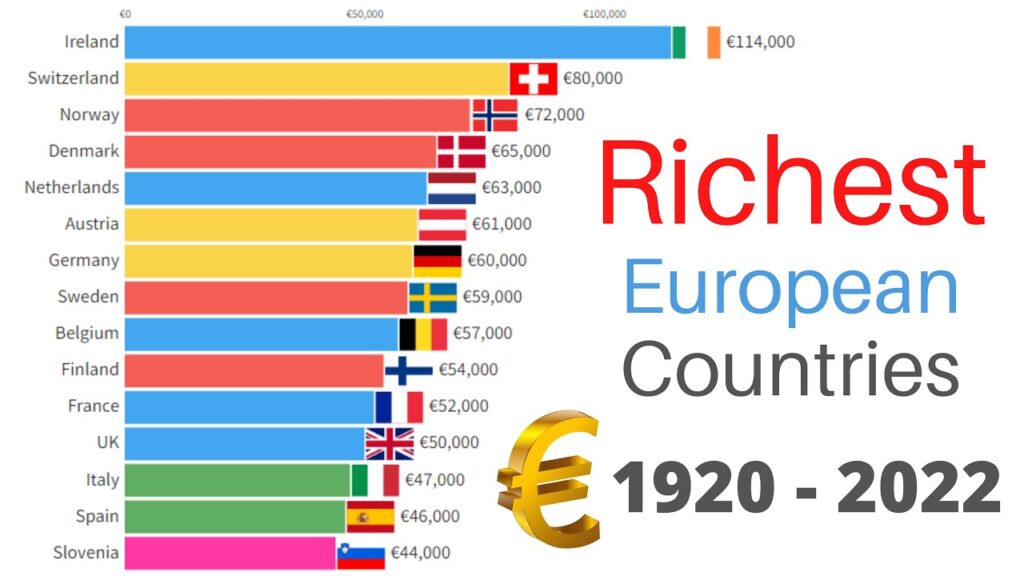
The vast tapestry of Europe is interwoven with the rich histories, cultures, and economies of its diverse nations. As one wanders through the continent, a fascinating question emerges: which European countries possess the greatest wealth? This inquiry brings to light not merely the gross domestic products (GDP) or the average income levels, but also the underlying factors that sculpt these nations into financial behemoths. In this exploration of the top ten richest European countries by wealth, we delve into the multifaceted elements that contribute to their financial success.
1. Luxembourg
Nestled between Belgium, France, and Germany, Luxembourg is renowned for its staggering wealth. With a GDP per capita that often exceeds $100,000, this diminutive nation has established itself as a fulcrum of finance in Europe. One reason behind its affluence is its strategic tax policies that have attracted multinational corporations and investment funds to domicile in its borders. Furthermore, its robust banking sector and a well-developed economy focused on information technology and logistics play pivotal roles in its financial narrative.
2. Switzerland
Switzerland, a global financial powerhouse, captivates with its picturesque landscapes and high standard of living. The country’s wealth is bolstered by its reputation for financial security, discretion, and stability. Home to numerous banks and financial institutions, it has become a haven for affluent individuals seeking refuge for their assets. The Swiss economy thrives on sectors such as finance, pharmaceuticals, and advanced manufacturing, showcasing a meticulous blend of tradition and innovation that propels its unparalleled wealth.
3. Norway
Norway, endowed with an abundance of natural resources, particularly oil, exemplifies how resource wealth can lead to national prosperity. The country’s sovereign wealth fund, built from its oil revenues, is one of the largest in the world, ensuring sustainability for future generations. Besides oil, the Norwegian economy is diversified with a strong focus on shipping, seafood, and renewable energy. Its commitment to social welfare and the well-being of its citizens complements the financial affluence, portraying a holistic approach to wealth.
4. Ireland
With its corporate-friendly environment and low tax rates, Ireland has emerged as a magnet for foreign direct investment. The tech industry, featuring giants like Google and Apple, plays a significant role in driving its economy. The Irish economy exhibits remarkable resilience, bolstered by a young, educated workforce and a burgeoning export sector. These factors contribute to a compelling narrative of growth, transforming a historically agrarian society into a thriving hub of industry and innovation.
5. Denmark
Denmark stands as a paragon of a high-income economy, with a strong emphasis on welfare and egalitarianism. The nation enjoys robust agricultural, pharmaceutical, and renewable energy sectors, which contribute significantly to its wealth. Denmark’s unique business model of fostering collaboration between industry and government creates an environment ripe for innovation and sustainability. The Danish notion of ‘hygge’ reflects a lifestyle that values quality and happiness, which is inherently interwoven with their economic success.
6. Sweden
Renowned for its innovative spirit and high standard of living, Sweden is a leading example of a nation successfully navigating the intricacies of modern capitalism. With a GDP per capita that emphasizes not just wealth but also quality of life, Sweden’s economy thrives on technology, pharmaceuticals, and manufacturing. The country’s emphasis on education and research contributes to a skilled workforce, ensuring that its industries remain competitive on the global stage. The blend of social responsibility with economic ambition characterizes Sweden’s appeal.
7. Netherlands
The Netherlands is synonymous with trade and commerce, historically serving as a logistical center in Europe. Its wealth emanates from its innovative agricultural practices, robust trade networks, and a well-integrated financial sector. The Dutch approach to business, characterized by openness and international cooperation, fosters a climate ripe for investment and growth. The nation’s extensive network of infrastructure, particularly its ports and transportation systems, underlines its critical role in global trade, further augmenting its economic status.
8. Austria
Austria’s geostrategic location in Central Europe positions it as a vital link in European trade. Its economy thrives on a blend of services, manufacturing, and tourism. The Austrian commitment to a high-quality education system ensures a skilled labor force, critical to its economic success. The nation’s picturesque landscapes and historic cities also attract millions of tourists each year, adding a significant revenue stream that supports its wealth. Austria’s ingenious balance of tradition and modernity is integral to its prosperity.
9. Finland
Finland shines brightly as an example of how education and innovation can lead to economic success. Often ranked highly in global education systems, the nation’s focus on technology, education, and sustainability has fostered a prosperous economy. Finnish companies are at the forefront of design and technology, producing globally recognized brands. The social policies that prioritize well-being and equality further enhance the quality of life, illustrating a modern economy that values both growth and social responsibility.
10. Belgium
Belgium, with its intricate tapestry of cultures and languages, holds a unique position within Europe. The country’s wealth is partly derived from its central role in European politics and its status as the headquarters for numerous international organizations, including the European Union. In addition, Belgium’s robust industries, including diamonds, chemicals, and food production, underwrite its economic stability. As a nation, it marries tradition with modernity, epitomizing an economy that is as diverse as its populace.
In conclusion, the richest European countries reveal a complex interplay of historical legacies, resource management, strategic planning, and socio-economic frameworks. The wealth of nations such as Luxembourg and Switzerland may be more readily apparent, but the nuanced contributions of countries like Finland and Denmark cannot be overlooked. As Europe continues to evolve, these nations serve as a testament to the multifaceted nature of wealth and the visionary paths that lead to enduring prosperity.
FAQ
Which European country is the richest by GDP per capita?
Luxembourg is the richest European country by GDP per capita, often exceeding $100,000.
How does Norway sustain its wealth?
Norway sustains its wealth primarily through its sovereign wealth fund built from oil revenues, along with diversified sectors like shipping, seafood, and renewable energy.
What role do tax policies play in the wealth of European countries?
Tax policies, such as those in Luxembourg and Ireland, attract multinational corporations and foreign direct investment, boosting economic growth and wealth.
Which sectors contribute most to Switzerland’s wealth?
Switzerland’s wealth is largely supported by finance, pharmaceuticals, and advanced manufacturing sectors.
Why is Belgium considered wealthy in Europe?
Belgium’s wealth stems from its central role in European politics, headquarters of international organizations, and strong industries like diamonds, chemicals, and food production.





Leave a Reply