
Short Answer
In a world brimming with botanical wonders, certain blooms stand out as remarkable treasures, draped in rarity and ineffable allure. These flowers bloom like whispers of nature’s artistry, each petal a brushstroke of splendor. Let us embark on a captivating journey through the realm of flora, introducing you to the top 10 rarest flowers that grace our planet. These stunning and unique specimens are not only delightful to behold but are also steeped in intrigue and tales that add to their mystical charm.
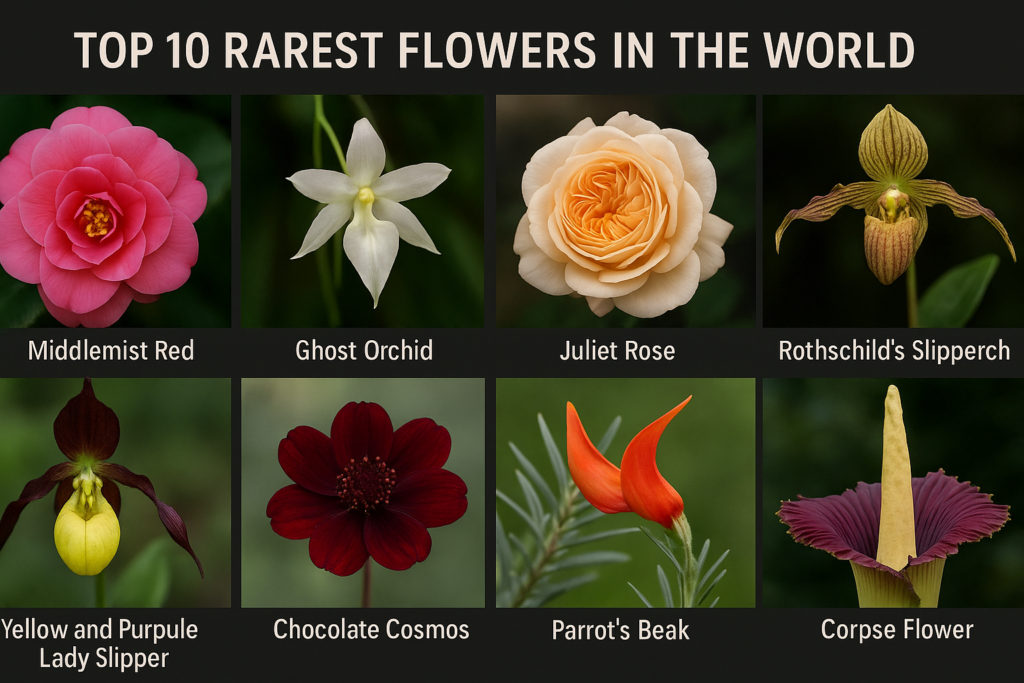
1. Corpse Flower (Amorphophallus titanum)
The titan of floral oddities, the Corpse Flower, unveils a spectacle of nature that is both grotesque and mesmerizing. Known for its colossal size, reaching over ten feet in height, it releases a pungent odor akin to rotting flesh upon blooming. This unusual fragrance attracts pollinators, primarily carrion beetles, creating a unique interplay between beauty and the macabre. As this infrequent bloomer takes years to produce its glorious flower, it ignites a sense of anticipation that is almost palpable.
2. Middlemist’s Red (Middlemist camellia)
Once believed to be extinct, the Middlemist’s Red is a botanical phoenix, rising from the ashes of rarity. With only two known specimens remaining—one in New Zealand and another in the UK—this exquisite camellia presents delicate, vibrant pink blossoms that inspire visions of blush sunsets. Its petals, like silken whispers, envelop the onlooker in a serene embrace, making it a poetic symbol of nature’s ability to endure and flourish against all odds.
3. Ghost Orchid (Dendrophylax lindenii)
Gracefully suspended in the heart of Florida’s swamplands, the Ghost Orchid is a perennial enigma, shrouded in myths and legends. Cloaked in elusive beauty, its hauntingly ethereal white flowers appear to float mid-air, resembling delicate apparitions among the foliage. Thriving in shady, swampy habitats, this rare orchid eludes capture, adding to its mystique. The Ghost Orchid’s enchanting bloom is transient, drawing admirers into a quest to behold its ephemeral charm—a reminder of nature’s fleeting magic.
4. Jade Vine (Strongylodon macrobotrys)
Imposing yet beguiling, the Jade Vine captivates with its serpentine clusters of turquoise flowers that cascade like a mesmerizing waterfall. Native to the lush forests of the Philippines, it’s a testament to the splendor that can spring forth from biodiversity. Each bloom resembles a delicate chandelier, illuminating the verdant canopy above. The Jade Vine is a celebration of color that commands admiration, daring onlookers to embrace its stunning contrast against the deep greens surrounding it.
5. Rothschild’s Orchid (Paphiopedilum rothschildianum)
The epitome of floral elegance, Rothschild’s Orchid is revered for its exquisite pouch-like bloom, simulating an intricate tapestry of patterns and colors. Found amidst the misty heights of Borneo, this rare orchid stands as a beacon of adaptability in the face of environmental threats. It flourishes in the most pristine microhabitats, encapsulating the essence of resilience. The orchid, with its velvety texture and rich hues, is a reminder that nature’s artistry knows no bounds.
6. Franklinia (Franklinia alatamaha)
Once a beacon of beauty along the Altamaha River in Georgia, Franklinia is now extinct in its natural habitat, saved only by its transplantation to gardens and arboretums. The delicate white flowers, adorned with striking yellow anthers, invoke images of tender spring afternoons. This flower is a reminder of nature’s fragility, a poetic emblem of the temporality of existence, urging guardianship over our delicate ecosystem.
7. Blue Vanda Orchid (Vanda coerulea)
An exquisite marvel of nature, the Blue Vanda Orchid is a true testament to the wonders of floral coloration. This rare orchid exhibits striking azure petals that seem to capture the endless sky. Native to the high altitudes of Southeast Asia, these flowers are elusive and treasured. Their unique blue hue is an embodiment of the ethereal, as if they’ve harnessed the essence of twilight. Each blossom, like a fleeting moment of serenity, inspires those who encounter it to bask in the tranquility of nature’s palette.
8. Yellow and Purple Lotus (Nymphaea colorata)
In the tranquil stillness of sacred ponds, the Yellow and Purple Lotus emerges, a symbol of enlightenment and rebirth. Its vibrant petals unfurl with the dawn, whispering secrets of harmony and peace. Revered in various cultures, these flowers illustrate nature’s proclivity to prosper in the most unexpected environments. The duality of their coloration evokes a sense of balance, offering insight into the profound beauty of existence, while standing resolutely as a reminder of life’s complexity.
9. Rafflesia arnoldii
Known as the “corpse flower’s cousin,” Rafflesia arnoldii flaunts blooms that can measure up to three feet in diameter. Its deep red petals, dotted with white speckles, release a repugnant odor reminiscent of decaying matter to attract pollinators. Found solely in the rainforests of Sumatra and Borneo, this rare parasitic plant embodies the raw, untamed essence of nature. Each bloom feels like an alien encounter, pulling observers into a world where beauty dances with the grotesque, challenging our perceptions of allure.
10. Black Bat Flower (Tacca chantrieri)
The enigmatic Black Bat Flower elicits fascination with its dark, gothic allure. This rare plant, with its striking blackish petals resembling a bat in flight, draws attention much like a shadowed figure in a moonlit garden. Native to Southeast Asia, its unique appearance is enchanting, leaving an indelible mark on all who encounter it. The Black Bat’s unusual form captivates our imagination and invites us to explore the mysterious corners of nature’s design.
As we conclude our exploration of these rarest of flowers, it becomes evident that each bloom tells a story rich in beauty, intrigue, and resilience. These unique specimens remind us of the fragile tapestry of life, urging us to appreciate nature’s wonders while advocating for the preservation of these botanical jewels. In the delicate petals of these flowers lie profound lessons—of continuity, adaptation, and above all, the enchanting diversity that the world has to offer.
FAQ
What makes a flower rare?
A flower is considered rare due to factors such as limited geographic distribution, low population numbers, specific habitat requirements, or threats from environmental changes and human activities.
Why are some flowers endangered or extinct in the wild?
Many rare flowers face extinction due to habitat loss, climate change, over-collection, pollution, and invasive species that disrupt their natural ecosystems.
How can I help conserve rare flowers?
Supporting conservation organizations, avoiding purchasing wild-collected rare plants, planting native species, and raising awareness about habitat protection are effective ways to help conserve rare flowers.






Leave a Reply