
Short Answer
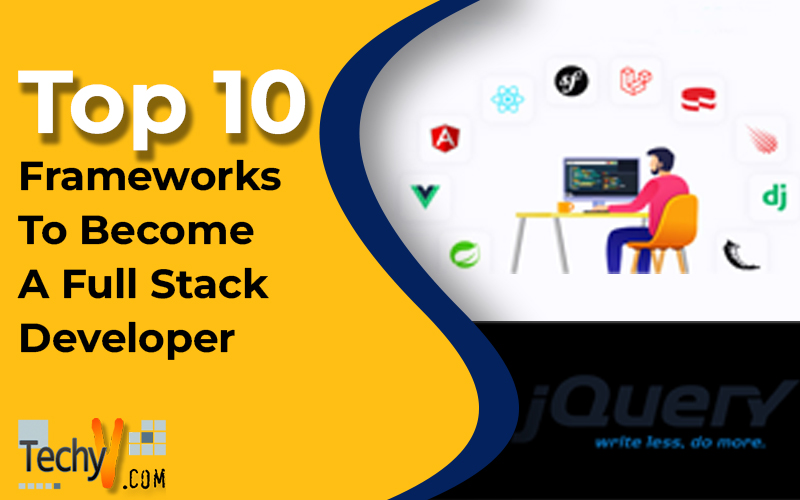
In the rapidly evolving landscape of technology, programming frameworks serve as the scaffolding upon which software applications are built. They provide developers with the foundational structures and ready-to-use components that streamline code development, promote best practices, and ultimately facilitate the creation of robust applications. Whether you’re a budding programmer or a seasoned developer seeking to sharpen your toolkit, familiarizing yourself with the following ten programming frameworks is imperative. Each one offers unique advantages and caters to diverse needs, fueling innovation and creativity in the digital realm.
1. Django
Django stands out as an eminent web framework for Python developers. With a focus on rapid development and clean design, it adheres to the DRY (Don’t Repeat Yourself) principle, allowing coders to construct web applications with impressive efficacy. Its powerful admin interface, customizable URL routing capabilities, and extensive libraries contribute to a seamless development experience. Aside from its impressive array of features, Django’s emphasis on security ensures robust protection against common vulnerabilities, making it a formidable choice for both startups and large enterprises.
2. React
Often regarded as the cornerstone of modern front-end web development, React—a JavaScript library developed by Facebook—exemplifies a component-based architecture that enhances maintainability and performance. By employing a virtual DOM to optimize rendering, it facilitates responsive user interfaces that are not just dynamic, but also efficient. Its declarative nature allows developers to craft richly interactive applications while minimizing potential pitfalls associated with state management. The ecosystem surrounding React, including Redux for state management, further amplifies its capabilities, enticing developers to explore its myriad possibilities.
3. Angular
Angular, a full-fledged framework maintained by Google, revolutionizes the development of single-page applications (SPAs) through its comprehensive approach. Employing TypeScript as its primary language, Angular offers advanced features such as dependency injection, two-way data binding, and a modular architecture that promotes code reusability. This framework empowers developers to build large-scale applications with ease, ensuring scalability and maintainability. Its robust tooling and rich ecosystem of libraries simplifies the integration of complex functionalities, solidifying Angular’s position in the developer community.
4. Laravel
For those immersed in PHP development, Laravel emerges as an elegant and pragmatic framework that embodies simplicity and sophistication. Laravel enhances productivity through its expressive syntax, comprehensive routing capabilities, and a rich set of tools like Eloquent ORM for database interaction. Its powerful templating engine, Blade, allows for the creation of dynamic layouts that retain clarity and coherence. Additionally, Laravel’s built-in security features, such as CSRF protection and password hashing, bolster application security. This framework not only facilitates a smooth development process but also inspires a sense of craftsmanship in coding.
5. Node.js
Node.js has surged in popularity due to its non-blocking, event-driven architecture, which caters to real-time applications that require high concurrency. As a runtime built on Chrome’s V8 engine, it allows developers to use JavaScript for server-side scripting, effectively unifying the development process. The vast repository of packages available through npm decentralized the coding landscape, fostering the reuse of code and acceleration of development timelines. Its capability to handle I/O-bound tasks with remarkable efficiency positions Node.js as a staple for developing scalable network applications.
6. Ruby on Rails
Ruby on Rails, often dubbed Rails, champions convention over configuration, allowing developers to expedite application development without sacrificing quality. This framework thrives on simplicity and convention, enabling rapid prototyping and iteration. Its emphasis on RESTful application design and its robust set of built-in tools facilitate the integration of essential functionalities. The vibrant community surrounding Rails and the plethora of gems available contribute to a continually evolving framework that reflects the dynamic needs of contemporary web applications.
7. Vue.js
Vue.js has emerged as a compelling alternative to its more established competitors by offering an approachable yet powerful framework for building user interfaces. Its reactive data binding, coupled with a component-based design, encourages a modular approach to application development. Vue’s gentle learning curve makes it particularly appealing to novices, while seasoned developers appreciate its flexibility and performance. The integration capabilities with existing projects and the stunning results achievable with minimal configuration entice developers to harness its prowess.
8. Flask
Flask stands out as a minimalist web framework, particularly suitable for Python developers seeking a lightweight yet effective solution for building web applications. Its micro-framework approach allows for exceptional versatility, enabling developers to incorporate only the elements they require, thereby preventing unnecessary bloat. Flask’s simplicity encourages rapid development and experimentation, making it an attractive choice for startups and prototyping. Its extensive documentation and supportive community further bolster the developer experience, facilitating a straightforward path to creating dynamic applications.
9. ASP.NET
For those entrenched in the Microsoft ecosystem, ASP.NET provides a powerful framework for building dynamic web applications. Leveraging the CLR (Common Language Runtime), it supports multiple programming languages, allowing developers the flexibility to choose their preferred language. Its robust security features, built-in caching, and comprehensive libraries set ASP.NET apart. Additionally, the evolution towards ASP.NET Core has introduced cross-platform capabilities, affording developers the ability to build scalable and high-performance applications across diverse operating systems.
10. Spring
The Spring Framework stands out as a comprehensive solution for Java developers, promoting a modular architecture that enhances both productivity and flexibility. With its extensive features—including dependency injection, aspect-oriented programming, and powerful data access integrations—Spring provides a holistic approach to application development. The emergence of Spring Boot expedites the setup of production-ready applications, minimizing configuration overhead. This adaptability makes Spring a mainstay in enterprise-level applications, reassuring developers of its reliability and robustness.
In conclusion, the programming frameworks listed here illuminate the diverse paradigms and philosophies that shape software development today. By mastering these frameworks, developers equip themselves with not only technical prowess but also the ability to innovate and adapt in an ever-changing digital landscape. Embracing these tools addresses both immediate project needs and long-term career aspirations, ultimately enriching the coding experience. With curiosity as your compass, delving into these frameworks offers boundless opportunities for creativity and excellence in programming.
FAQ
What is a programming framework?
A programming framework is a software platform that provides a foundation and reusable components for building applications, helping developers streamline coding and enforce best practices.
Why should developers learn multiple frameworks?
Learning multiple frameworks equips developers with versatile skills to handle different project requirements, improves productivity, and enhances problem-solving capabilities across diverse programming environments.
Which programming frameworks are best for beginners?
Frameworks like Vue.js and Flask are often recommended for beginners due to their simplicity, gentle learning curves, and flexibility.
Are these frameworks suitable for enterprise applications?
Yes, frameworks such as Spring, ASP.NET, and Django are widely used in enterprise environments for building scalable and secure applications.
How do frameworks improve application security?
Many frameworks provide built-in security features like CSRF protection, password hashing, and input validation, helping developers safeguard applications against common vulnerabilities.





Leave a Reply