
Short Answer
Chess, often likened to a battle of minds, has captivated strategists and enthusiasts for centuries. Its elegance lies not only in the rules and movements of the pieces but also in the grand tapestry woven by its most exceptional players. In this exploration, we delve into the top ten greatest chess players of all time, whose legacies continue to inspire and redefine the game. Each of these luminaries has transcended mere competition, leaving indelible marks on both the board and the hearts of players around the world.
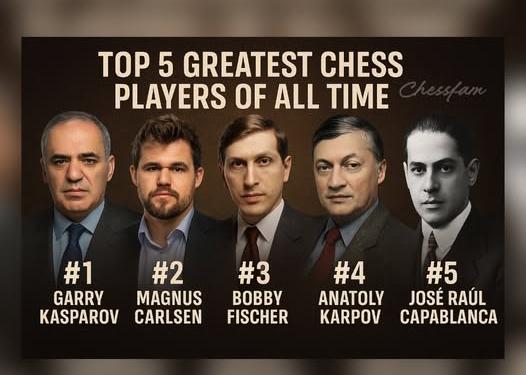
1. Garry Kasparov
Regarded by many as the greatest chess player of all time, Garry Kasparov’s ascent to prominence began with his extraordinary victory over Anatoly Karpov in 1985. His aggressive style, deep preparation, and profound understanding of the game transformed the landscape of competitive chess. Not just a player, but a fierce advocate for the game’s evolution, Kasparov famously engaged in public intellectual discourse, blending chess with politics and philosophy. His legacy, marked by multiple World Championships and unprecedented tournament victories, continues to resonate, as he remains an influential figure in the chess world.
2. Magnus Carlsen
Emerging as a prodigy, Magnus Carlsen ascended to the title of World Chess Champion at the tender age of 22. His style is characterized by remarkable versatility and an innate ability to exploit subtle imbalances on the board. Carlsen’s dominance has solidified his position as a modern-day chess icon, and his reign, which began in 2013, has been marked by numerous title defenses against formidable opponents. His influence transcends traditional boundaries; he has popularized chess through innovative techniques and a charismatic approach, blending the ancient game with modern entertainment.
3. Bobby Fischer
The enigmatic Bobby Fischer is often credited with popularizing chess in the United States during the Cold War era. His tumultuous journey, marked by brilliance and controversy, culminated in his legendary match against Boris Spassky in 1972, which became a symbolic showdown between the U.S. and the Soviet Union. Fischer’s unorthodox strategies and obsessive preparation left a profound impact on future generations. While his later years were shrouded in mystery and isolation, his contributions to chess theory, especially regarding openings and the psychology of play, remain seminal.
4. Anatoly Karpov
Anatoly Karpov, Fischer’s adversary, epitomized classical chess. A player who excelled in positional play, Karpov’s ability to dominate opponents through incremental advantages is legendary. He held the World Championship for a decade, showcasing an uncanny knack for finding the best moves under pressure. Karpov’s contributions to chess extend beyond his playing career; he has authored numerous books and remains an influential commentator on the game, solidifying his role as a custodian of chess principles.
5. Emanuel Lasker
Emanuel Lasker, a towering figure in chess history, held the World Championship title for an astonishing 27 years. Lasker’s genius lay in his profound understanding of psychological warfare; he frequently outmaneuvered opponents not only with tactics but also with mental fortitude. His contributions to chess theory, particularly in the realm of endgames, are invaluable, and his philosophical writings on the game have inspired countless players to contemplate the deeper aspects of chess, elevating it to an art form.
6. José Raúl Capablanca
Capablanca, the third World Champion, is celebrated for his intuitive grasp of the game. Known for his remarkable endgame skills and natural talent, he made profound contributions to the understanding of chess strategy. His signature “natural play” emphasized simplicity and clarity, often leading him to victory through seemingly effortless maneuvers. Capablanca’s influence extends to modern chess literature, where his teachings remain relevant, instilling clarity in complex situations.
7. Mikhail Tal
The “Wizard of Riga,” Mikhail Tal, was synonymous with flamboyant play and daring sacrifices. His dynamic style made him a perennial crowd favorite, as he often favored risk over safety, inspiring a generation of chess enthusiasts to embrace the beauty of creativity on the board. Tal’s reign as World Champion was brief, but his legendary games and ability to conjure magic from seemingly impossible positions have enshrined him in the annals of chess history.
8. Vladimir Kramnik
Vladimir Kramnik, the man who dethroned Kasparov in 2000, is renowned for his profound strategic understanding and pragmatic approach to the game. His development of the Berlin Defense, a formidable opening line, shifted modern opening theory significantly. Kramnik’s consistent results in tournaments and his role in championing the classical format have made him a vital figure in contemporary chess. His contributions to opening theory and endgames remain influential, continuing to shape the strategies of aspiring players around the world.
9. Deep Blue / Computer Chess
While not a traditional player, the IBM chess computer Deep Blue deserves recognition for its groundbreaking impact on the game. Its victory against Kasparov in 1997 marked a watershed moment in the relationship between humans and machines. This event sparked a profound exploration of artificial intelligence and its implications for strategic thinking, igniting debates about the nature of intelligence itself. Deep Blue’s legacy challenges our understanding of chess and compels a reevaluation of human creativity versus computational power.
10. Hikaru Nakamura
Hikaru Nakamura represents the new wave of chess players reshaping the landscape through online platforms and streaming. His exceptional skill in rapid and blitz formats has earned him accolades and a devoted following. Known for his engaging personality, Nakamura bridges the gap between traditional chess and modern entertainment, making the game accessible to a broader audience. His contributions to popularizing chess in the digital age signify a shift in how the game is perceived, bringing it into the realm of mainstream culture.
In summation, the greatest chess players of all time are not merely champions of the board; they are icons of resilience, intellect, and creativity. Their diverse styles and revolutionary ideas continue to inspire both novice and seasoned players alike. Whether through innovative strategies, charismatic personalities, or contributions to chess theory, each player has carved a unique niche in the history of this timeless game. Exploring their legacies offers a fresh perspective that inspires curiosity, inviting us to engage more deeply with the intricacies of chess and its communal spirit.
FAQ
Who is considered the greatest chess player of all time?
Garry Kasparov is widely regarded as the greatest chess player of all time due to his dominant reign and influential style.
What are some contributions of Bobby Fischer to chess?
Bobby Fischer popularized chess in the United States, introduced unorthodox strategies, and had a profound impact on chess theory and psychology.
How did Deep Blue impact the game of chess?
Deep Blue’s victory over Kasparov in 1997 marked a significant milestone in artificial intelligence and challenged the traditional understanding of human vs. machine strategic thinking.
What is unique about Magnus Carlsen's chess style?
Magnus Carlsen is known for his versatility and ability to exploit subtle imbalances, making him a dominant modern chess icon.





Leave a Reply