
Short Answer
When one mentions the name Pablo Picasso, a flurry of colors, avant-garde compositions, and profound emotional depths come to mind. Often deemed a titan of modern art, Picasso’s works transcend mere paint on canvas; they provoke thought, stir the soul, and, indeed, challenge conventional aesthetics. Have you ever contemplated how a solitary painting can encapsulate the essence of an entire century? Ready to embark on an artful journey through the lens of one of history’s most prolific creators? If so, buckle up as we explore the top 10 Picasso paintings that are truly must-sees.
1. Les Demoiselles d’Avignon (1907)
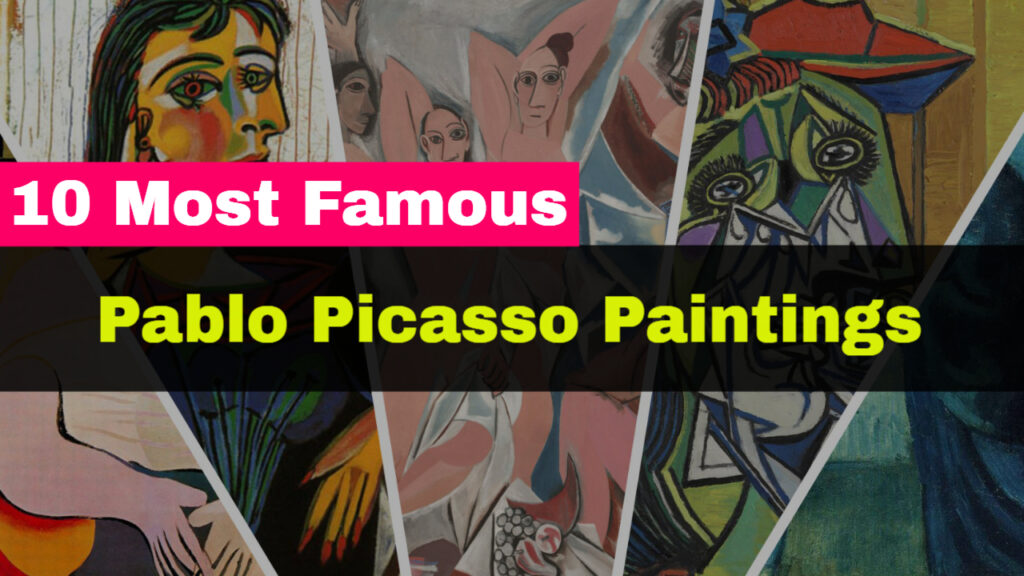
Regarded as one of Picasso’s monumental masterpieces, “Les Demoiselles d’Avignon” disrupts traditional representations of femininity and beauty. The painting depicts five nude women—each characterized by angular forms and mask-like faces—that challenge viewers to grapple with issues of desire, sexuality, and the complexities of modern identity. Its striking composition invites contemplation: Are we mere observers, or do we also play a role in the evolving narrative of femininity?
2. Guernica (1937)
“Guernica” serves as a relentless critique of war and human suffering. Created in response to the bombing of the Basque town during the Spanish Civil War, this large mural encapsulates chaos and anguish. The frantic horses, women screaming, and the haunting gaze of the bull evoke a visceral response that goes beyond art; it is a political statement and an emotional outpouring. Can one piece of art embody the horrors of conflict? Picasso believed it could, and he succeeded.
3. The Weeping Woman (1937)
This poignant work portrays a woman in tears, embodying grief wrought from conflict and loss. Through the interplay of jagged lines and expressive colors, Picasso captures the emotional turbulence faced by his subjects, reflecting the impact of war on the human psyche. The question arises: How does art allow us to process pain? In “The Weeping Woman,” Picasso invites us into her sorrow, urging viewers to confront their own emotional landscapes.
4. Girl Before a Mirror (1932)
In “Girl Before a Mirror,” Picasso juxtaposes the realities of identity and self-perception. The vibrant colors and geometric shapes contrast the tangible girl with her reflection, suggesting that what we see is often clouded by our personal interpretations. This painting invites introspection: How do we see ourselves versus how are we perceived by others? It is a challenge to delve into the very essence of self-awareness.
5. The Old Guitarist (1903-1904)
This melancholic piece emerges from Picasso’s Blue Period, characterized by somber tones and themes of despair. “The Old Guitarist” captures the melancholia of an aging musician consumed by his art. The elongated forms and muted colors evoke feelings of isolation and sorrow. Yet, there’s beauty in the struggle. Is it possible that our own struggles can lead to profound artistry and connection? Picasso seems to argue so.
6. Three Musicians (1921)
This vibrant composition features three figures, each represented in a faceted form that echoes the principles of Cubism. The painting radiates joy and movement, a stark contrast to the somber tones of Picasso’s earlier works. Each musician seems to interact with the others, generating an energetic rhythm that resonates throughout the canvas. Amidst the cacophony of colors, one must ponder: Can harmony emerge from chaos?
7. The Charnel House (1944-1945)
This haunting composition represents Picasso’s response to the horrors of World War II. The chaotic arrangement of figures evokes a visceral sense of loss and despair. It intricately illustrates the devastating consequences of conflict on human life. Through such raw depictions, the painting prompts a challenge: How do we reconcile our understanding of history with the emotions it provokes? What narratives do we choose to commemorate?
8. Family of Saltimbanques (1905)
This work encapsulates the essence of Picasso’s Rose Period, infused with warm hues and a sense of nostalgia. Depicting a group of circus performers, it explores themes of isolation and camaraderie. The figures seem to inhabit a world between reality and performance, raising a question: What masks do we wear in our daily lives? This painting encapsulates the juxtaposition of belonging and alienation.
9. The Lovers (1923)
“The Lovers” translates the complexity of intimate relationships through minimalistic forms and muted colors. The intertwining figures embody an enigmatic connection, revealing love’s dual nature of vulnerability and strength. With such simplicity, it raises profound inquiries: How does love define us? What sacrifices are made in its name? In exploring these questions, Picasso enriches the discourse surrounding love and connection.
10. Portrait of Dora Maar (1937)
This beautiful yet complex portrait showcases Picasso’s muse, Dora Maar, exuding both strength and vulnerability. The painting reflects not just Maar’s essence but also Picasso’s emotional state, intertwined with themes of obsession and turmoil. The question beckons: Are we ever fully depicted in the eyes of another? The layers of meaning in this portrait encourage viewers to reflect on the intricacies of identity and perception.
As we conclude our artistic excursion through the masterpieces of Pablo Picasso, one ponders the myriad interpretations these works invite. Each painting stands as a challenge to the observer—an invitation to delve deeper into emotional landscapes, societal critiques, and the human condition itself. So, what’s stopping you from visiting the nearest art gallery or museum to experience these masterpieces in person? Engage with Picasso’s legacy and allow it to color your own perceptions of art and life.
FAQ
Who was Pablo Picasso?
Pablo Picasso was a Spanish painter, sculptor, and one of the most influential artists of the 20th century, known for pioneering Cubism and producing a vast body of work across multiple styles.
What is Cubism?
Cubism is an early 20th-century art movement co-founded by Picasso characterized by fragmented objects and multiple perspectives within a single plane.
Why is Guernica significant?
Guernica is a powerful anti-war painting by Picasso, created in response to the bombing of the Basque town during the Spanish Civil War, symbolizing the tragedies of conflict.
What are Picasso's Blue and Rose Periods?
Picasso's Blue Period (1901-1904) features somber tones and themes of poverty and despair, while the Rose Period (1904-1906) uses warmer colors and often depicts circus performers and more optimistic subjects.
Where can I see Picasso's paintings?
Many of Picasso's most famous works are housed in major museums worldwide, including the Museum of Modern Art in New York, the Picasso Museum in Barcelona, and the Reina Sofía Museum in Madrid.






Leave a Reply