
Short Answer
Throughout the annals of human civilization, certain countries have emerged as formidable influences in shaping world history. Their impact transcends mere territorial boundaries, redefining cultures, economies, and global interactions. This article explores the ten most influential countries in world history, delving into the multifaceted contributions and legacies they have bequeathed to the world. Each country on this list embodies distinct characteristics that echo through time, influencing not only their immediate surroundings but also distant nations across the globe.
1. Egypt
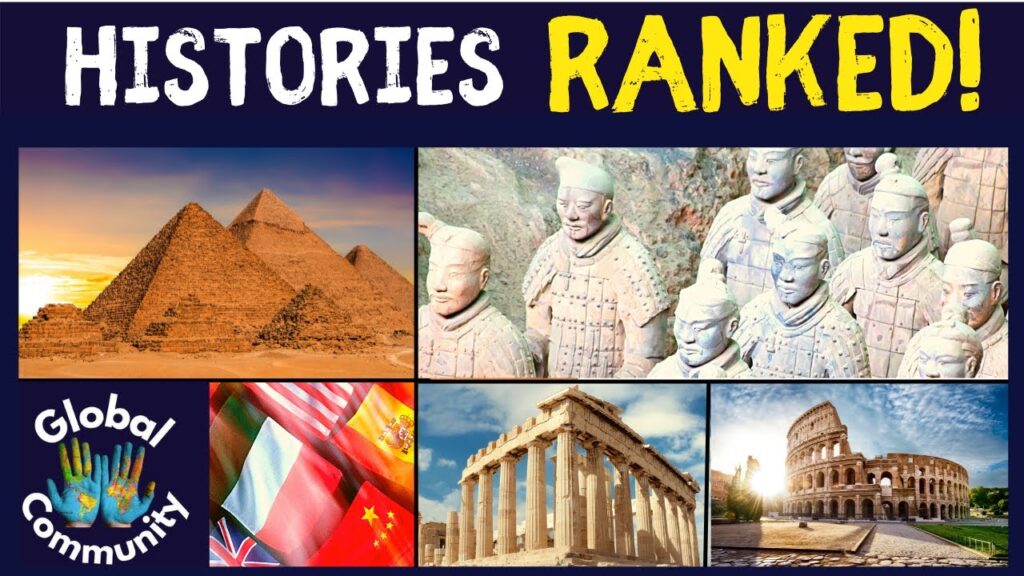
Egypt, a cradle of civilization, is renowned for its profound contributions to the realms of mathematics, astronomy, and architecture. The pyramids stand as monumental testaments to its architectural prowess and religious fervor. Ancient Egyptians pioneered writing systems, notably hieroglyphics, which not only facilitated record-keeping but also chronicled their engaging mythology and history. The Nile River, the lifeblood of the nation, fostered agrarian societies that flourished and left a lasting influence on subsequent civilizations.
2. Greece
The birthplace of democracy, Greece profoundly shaped political and philosophical thought. The city-states of Athens and Sparta epitomized the dichotomy of governance and military prowess. Philosophers such as Socrates, Plato, and Aristotle laid the groundwork for Western philosophy, ethics, and politics. The concepts of logic, citizenship, and individualism that emerged from ancient Greece continue to underpin modern societies, shaping governance models and civic participation worldwide.
3. Rome
The Roman Empire, a behemoth of political and military might, significantly influenced law, engineering, and culture. Roman law established principles of justice that resonate in today’s legal systems. Their engineering feats, demonstrated through aqueducts and roads, played crucial roles in commerce and connectivity. Moreover, the Latin language, which evolved from this ancient civilization, has birthed various Romance languages, imbuing communication and scholarship with a rich linguistic heritage.
4. China
Aland of ancient dynasties, China has contributed enduring philosophies, inventions, and cultural legacies. Confucianism and Taoism have shaped societal values and governance concepts. The invention of gunpowder, paper, and the compass revolutionized warfare, communication, and navigation respectively. China’s Silk Road served not merely as a commercial pathway but also as a conduit for cultural exchange, facilitating the spread of ideas, religion, and art across continents.
5. India
India’s historical tapestry is woven with remarkable advancements in mathematics, science, and spirituality. The concept of zero and the decimal system originated in ancient India, profoundly transforming mathematics. The subcontinent is also the birthplace of major religions, including Hinduism and Buddhism, each leaving indelible cultural and philosophical marks on a global scale. The rich literary tradition encapsulated in works like the Mahabharata and Ramayana continues to inspire and influence contemporary narratives.
6. Great Britain
Great Britain’s extensive empire heralded an era of significant global interaction and exchange. The Industrial Revolution, which began within its borders, transformed manufacturing and economic systems worldwide. British literature, philosophy, and political thought, notably from figures such as Shakespeare and John Stuart Mill, have left an indelible imprint on global culture. The English language, as a vestige of its colonial past, has emerged as a lingua franca in international discourse.
7. France
France has long been a bastion of art, philosophy, and revolutionary thought. The Enlightenment, with luminaries like Voltaire and Rousseau, challenged existing societal norms and inspired movements for democracy and human rights. The French Revolution catalyzed the concepts of liberty, equality, and fraternity, rippling through many nations and instigating sociopolitical transformations worldwide. French culture, exemplified through art, cuisine, and fashion, continues to captivate and influence globally.
8. United States
The United States emerged as a global superpower in the 20th century, a beacon of democracy, capitalism, and technological innovation. The American Revolution not only inspired successful independence movements but also established a new model of governance that emphasized individual rights. The U.S.’s contributions to science, technology, and popular culture, from jazz music to Hollywood films, have shaped global trends and fostered cross-cultural exchanges across the globe.
9. Russia
Russia’s vast empire has been a pivotal player in shaping geopolitical dynamics from the medieval era to the contemporary period. The Russian Revolution of 1917 brought forth the concept of communism, which influenced global political ideologies. Additionally, Russian literature, exemplified by Tolstoy and Dostoevsky, offers profound insights into the human condition, leaving a lasting legacy within the realm of world literature. Its cultural and political landscapes have continually stirred fascination and discourse internationally.
10. Japan
Japan, harmonizing tradition and modernity, has emerged as a global leader in technology and cultural influence. The Meiji Restoration marked a pivotal transition, enabling Japan to modernize rapidly while preserving its unique cultural identity. The post-war economic miracle established Japan as a formidable economic power, and its contributions to art, innovation, and philosophy—ranging from anime and manga to tea ceremonies—continue to captivate audiences worldwide.
In conclusion, the influence of these ten countries resonates through centuries of human history, shaping cultures, societies, and global interactions. Each nation has contributed distinctive legacies that intertwine, reflecting a shared human experience while simultaneously providing a tapestry of unique narratives. Understanding their historical significance fosters a broader appreciation for the complexity of our interconnected world and the myriad influences that continue to mold our present and future.
FAQ
Which country is considered the most influential in world history?
Determining the single most influential country is subjective; however, this article highlights ten countries whose contributions have significantly shaped world history.
What criteria were used to select the most influential countries?
The selection is based on each country's lasting impact on culture, politics, science, economy, and global interactions throughout history.
How has ancient Egypt influenced modern civilization?
Ancient Egypt contributed to mathematics, architecture, writing systems, and agriculture, with innovations such as hieroglyphics and the pyramids leaving enduring legacies.
Why is Great Britain included among the most influential countries?
Great Britain’s empire, the Industrial Revolution, and cultural contributions like the English language and political philosophy have had a profound global impact.
What role did China play in world history?
China introduced significant inventions such as gunpowder and the compass, and philosophies like Confucianism, which have influenced governance and culture worldwide.






Leave a Reply