
Short Answer
Art possesses an extraordinary ability to transcend time, culture, and language, connecting us on an emotive level that is both profound and ineffable. The masterpieces of paintbrush and canvas do not just adorn walls; they evoke emotions, provoke thoughts, and invite us into worlds rich with history. In this exploration of the most iconic paintings, we delve into the ten masterpieces that, through their beauty and significance, have become synonymous with artistic brilliance. Visiting these works is more than a mere simplicity of observation; it is stepping into a legacy that continues to inspire and educate generations.
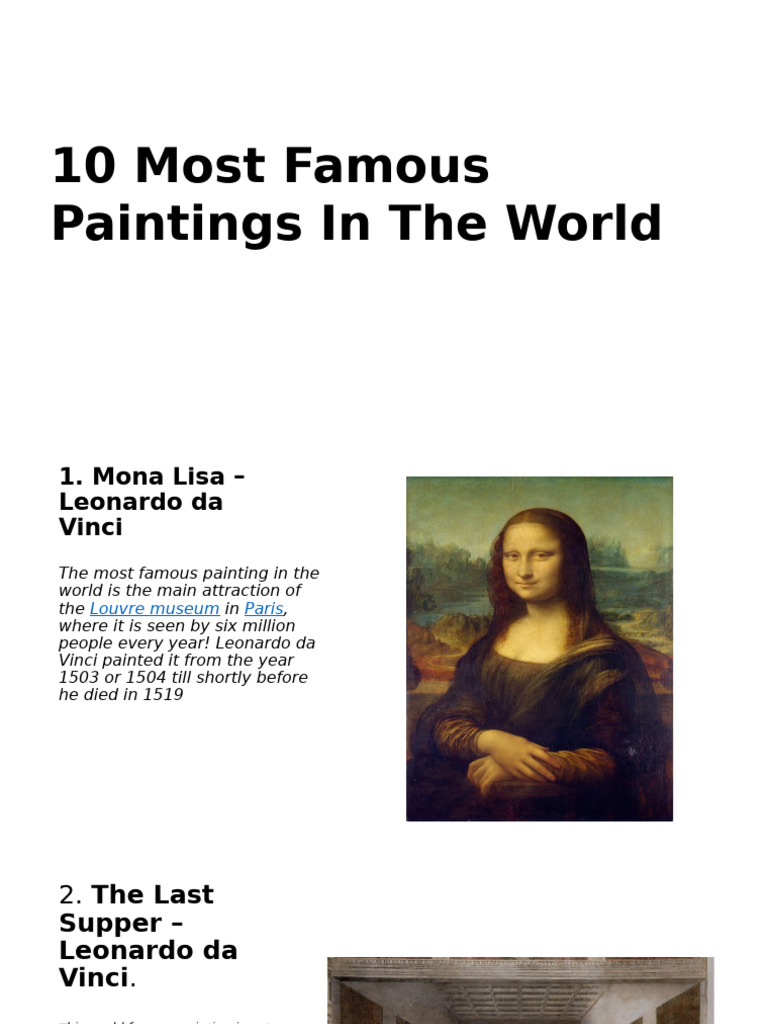
1. The Mona Lisa – Leonardo da Vinci
Arguably the most recognizable painting in the world, the Mona Lisa is housed in the Louvre Museum in Paris. Created around the early 1500s, this enigmatic portrait captivates with its subject’s elusive smile and piercing gaze. The painting’s atmospheric perspective foregrounds its skilled representation of the human psyche. An enduring fascination lies in the myriad interpretations of her expression, prompting a continuous dialogue about beauty, identity, and the elusive nature of happiness.
2. Starry Night – Vincent van Gogh
More than just a night sky filled with swirling stars, Starry Night is a vibrant representation of Van Gogh’s emotional turmoil and artistic vision. Painted while he was undergoing treatment in the Saint-Paul-de-Mausole asylum in France, the cobalt blues and radiant yellows depict not just a scene, but an internal struggle. Visitors to the Museum of Modern Art in New York are often drawn to its raw emotions, allowing each viewer to reflect on their own experiences of isolation and hope.
3. The Last Supper – Leonardo da Vinci
Another of Da Vinci’s masterpieces, The Last Supper offers a profound insight into the final moments shared between Jesus and his disciples. Located in the Convent of Santa Maria delle Grazie in Milan, this mural employs innovative use of perspective, drawing the audience into the emotional gravity of the scene. The juxtaposition of serene assurance and explosive reaction highlights themes of betrayal and faith, evoking a visceral response that resonates through centuries.
4. The Scream – Edvard Munch
With its haunting visage and turbulent backdrop, The Scream stands as an iconic symbol of existential dread. Munch’s exploration of deep anxiety and emotional upheaval transcends mere aesthetics, delving into the psychological depths of human experience. While originally painted in Norway, it now resides in various variants across museums. Its universal theme of anguish remains relatable, capturing the spirit of societal anxiety and individual despair.
5. Girl with a Pearl Earring – Johannes Vermeer
Often referred to as the ‘Mona Lisa of the North,’ Girl with a Pearl Earring is shrouded in mystery. This exquisite piece painted by Vermeer in the late 17th century draws viewers with its delicate play of light and texture. The girl’s gaze, vibrant yet introspective, invites speculation about her identity and story. Residing in the Mauritshuis in The Hague, the painting represents the allure of fleeting moments, encapsulating the intersection of beauty and enigma.
6. Guernica – Pablo Picasso
Picasso’s Guernica serves as a powerful anti-war statement, illustrating the horrors of the Spanish Civil War. This monumental canvas, displayed in the Museo Reina Sofia in Madrid, employs a stark palette and chaotic composition to reflect human suffering and devastation. The distortion of figures amplifies the emotional intensity, elevating it beyond mere representation to a poignant commentary on the cost of conflict. It remains relevant, echoing the themes of despair and loss in contemporary times.
7. The Creation of Adam – Michelangelo Buonarroti
Located on the ceiling of the Sistine Chapel, The Creation of Adam epitomizes the Renaissance’s celebration of humanism and divinity. This fresco captures the moment God imparts life to Adam with a mere touch. The electric tension of their outstretched fingers beckons contemplation, representing the divine spark of creation and the human experience. Michelangelo’s mastery lies not only in his technique but in his ability to invoke profound theological discourse.
8. American Gothic – Grant Wood
With its stark portrayal of stoic farmers against a Gothic backdrop, American Gothic has become an emblem of American identity. Painted in 1930 and housed in the Art Institute of Chicago, this artwork not only reflects agricultural life but also invites contemplation of American values and perseverance. The figures’ rigid expressions and meticulous details prompt discussions on tradition, resilience, and the complexities of rural life.
9. The Persistence of Memory – Salvador Dalí
A quintessential example of surrealism, The Persistence of Memory invites viewers into a dreamlike world where time dissolves and reality bends. Dalí’s dreamscapes challenge our perception of reality, addressing the fluid nature of time and memory. Residing in the Museum of Modern Art in New York, the melting clocks serve as metaphors for the ephemeral nature of existence, prompting a reflection on the significance of time in our lives.
10. The Kiss – Gustav Klimt
An ode to love and intimacy, Klimt’s The Kiss radiates warmth and passion through its lavish use of gold leaf and intricate patterns. Completed in the early 20th century and on display at the Österreichische Galerie Belvedere in Vienna, the painting embodies the fusion of ornamentation and symbolism. It encourages viewers to explore themes of connection, desire, and the transformative power of love within a transcendent context.
These ten masterpieces are more than mere images; they are poignant narratives that speak to the human experience, transcending their historical contexts to resonate with modern audiences. Each painting captures a moment, a feeling, or a thought—a glimpse into the creative soul of its artist and the time it represents. As one traverses through the art world, the experience of standing before these well-known paintings becomes a pilgrimage, an opportunity to engage with the past while reflecting upon our present realities. Indeed, the allure of these works lies not just in their aesthetics but in their ability to immerse us fully in the spectrum of human emotion and thought.
FAQ
What makes a painting famous?
A painting becomes famous due to its artistic quality, historical significance, cultural impact, and the recognition it receives from art experts and the public.
Where can I see the Mona Lisa?
The Mona Lisa is displayed at the Louvre Museum in Paris, France.
Which painting is considered a symbol of existential dread?
The Scream by Edvard Munch is widely regarded as a symbol of existential dread and emotional upheaval.






Leave a Reply