
Short Answer
Rivers are the lifelines of our planet, winding through various landscapes, nourishing ecosystems, and supporting countless communities. Each river carries with it a unique story, shaped by its origins, the terrain it traverses, and the cultures it intersects. Below is a comprehensive exploration of the longest rivers in the world, ranked to highlight their impressive lengths and significance.
1. Nile River (6,650 kilometers)
The indefatigable Nile, often heralded as the longest river in the world, gracefully traverses northeastern Africa. Beginning in Uganda, it meanders northward through eleven countries, culminating its journey in the Mediterranean Sea. The river’s course is enriched by tributaries, including the White Nile and Blue Nile, which join forces in Sudan. Throughout ancient history, the Nile has been revered as an essential resource for agriculture, culture, and commerce, giving rise to one of the world’s earliest civilizations—Ancient Egypt. Its annual floods enriched the soil, fostering agriculture that sustained millions.
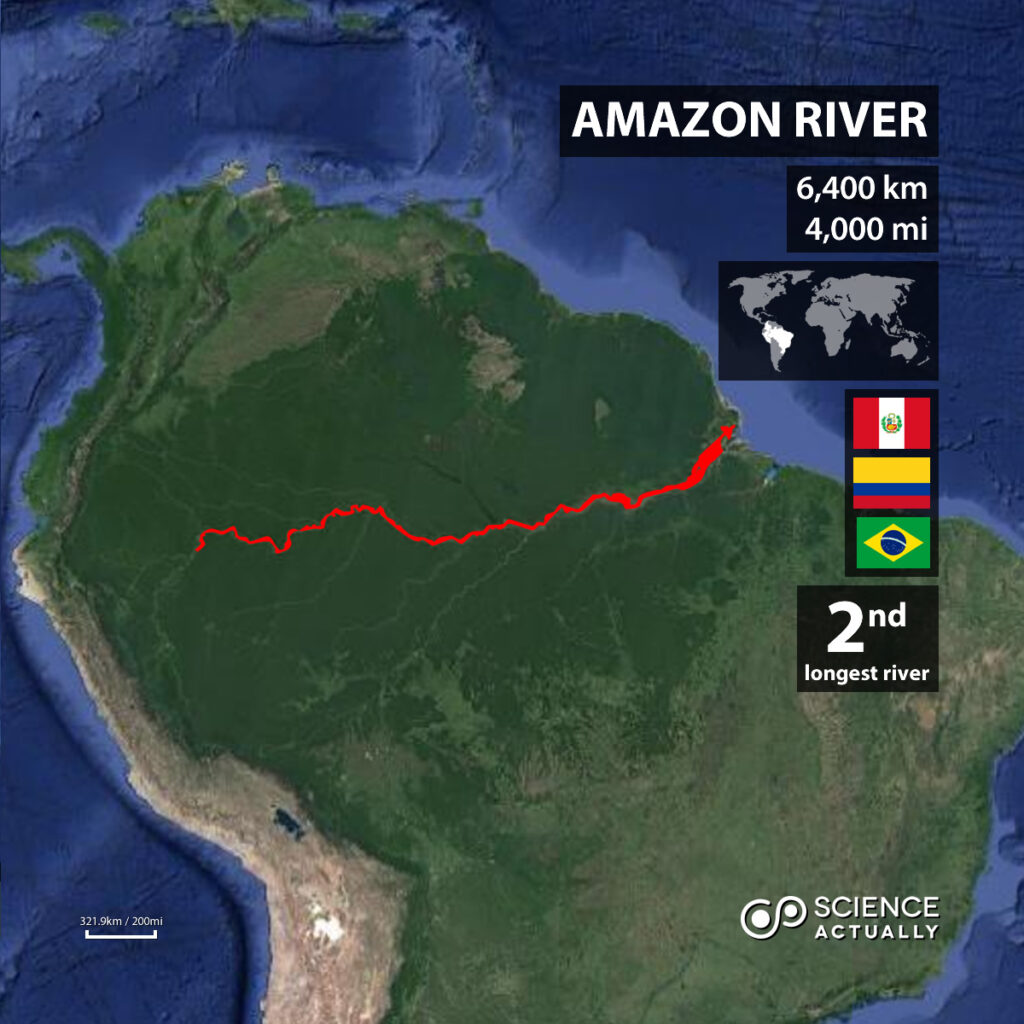
2. Amazon River (6,400 kilometers)
Flowing predominantly through Brazil, the Amazon River is not only the second longest river but also boasts the greatest discharge of any river globally. Spanning across several South American countries, it weaves through the dense Amazon rainforest, a biodiversity hotspot teeming with life. The Amazon River is essential for the ecology of the region and serves as a crucial transportation route. Its basin is home to myriad species, many of which remain undiscovered. The river’s sheer size and biological richness symbolize the untamed nature of the continent.
3. Yangtze River (6,300 kilometers)
As Asia’s longest river, the Yangtze flows through the heart of China, from the Tibetan Plateau, stretching to the East China Sea. Its extensive watershed supports one-third of China’s population, serving as a crucial artery for trade and agriculture. The river’s name, symbolizing “long river,” reflects its monumental presence in Chinese culture and history. The construction of the Three Gorges Dam has significantly transformed both the river’s ecology and the surrounding landscape, demonstrating the interplay between nature and human intervention.
4. Mississippi-Missouri River System (6,275 kilometers)
In the United States, the Mississippi and Missouri Rivers together form an intricate network that defines the country’s heartland. Originating in Minnesota, the Mississippi flows southward, while the Missouri River acts as a vital tributary, enlarging the overall length significantly. These rivers have been pivotal in shaping the economic and cultural landscape of the United States, facilitating commerce and migration. The intricate system is also essential for biodiversity, harboring diverse ecosystems along its banks.
5. Yenisei River (5,539 kilometers)
Flowing through Mongolia and Russia, the Yenisei River holds the title of the largest river system that drains into the Arctic Ocean. Originating from the Mongolian mountains, it journeys northward, slicing through Siberia before emptying into the Kara Sea. The river supports a variety of flora and fauna, showcasing a rich tapestry of natural beauty. The Yenisei is significant for hydroelectricity production, with dams harnessing its powerful currents, illustrating the balance between energy needs and environmental conservation.
6. Yellow River (Huang He) (5,464 kilometers)
The Yellow River, known as Huang He in Chinese, is often referred to as the “cradle of Chinese civilization.” Its winding course across northern China offers fertile plains that have sustained agriculture for millennia. The river’s unpredictable flooding has both nourished and devastated communities, earning it a dual persona as both a giver and taker of life. Historically, the Yellow River served as a vital navigational route and a cultural symbol, epitomizing the spirit of resilience among the Chinese people.
7. Ob-Irtysh River System (5,410 kilometers)
Flowing through Russia, Kazakhstan, and China, the Ob-Irtysh river system is crucial for both ecological and hydrological dynamics. This expansive river network begins in the Altai Mountains, coursing through tundras before laying to rest in the Arctic Ocean. The river is characterized by its vast, icy expanses during winter months and provides essential resources to the regions it nourishes. The river supports diverse wildlife, including the endangered sturgeon, and signifies the importance of maintaining sustainable water systems.
8. Parana-Rio de la Plata System (4,880 kilometers)
This remarkable river system traverses Brazil, Paraguay, and Argentina, ultimately forming one of the world’s largest river deltas, the Río de la Plata. The Paraná is vital for agriculture, particularly in the fertile lowlands of Argentina and Paraguay. This system is central to trade within South America and offers habitats for numerous aquatic species. The Paraná and its estuary are crucial in global shipping routes and continue to play an essential role in the economic framework of the region.
9. Congo River (4,700 kilometers)
As the second-longest river in Africa, the Congo River is a significant waterway that traverses lush tropical rainforests and diverse ecosystems. Starting in the Congo Basin, the river flows into the Atlantic Ocean, creating the world’s second-largest rainforest barrier. The Congo River contributes to the sustenance of approximately 75 million people and serves as a significant means of transportation in Central Africa—cutting through its rich cultural tapestry while also presenting challenges related to environmental degradation.
10. Amur-Black River System (4,444 kilometers)
This river system, forming part of the natural boundary between Russia and China, is characterized by its striking landscapes and rich biodiversity. With its origins in the Shilka River, the Amur meanders to the Sea of Okhotsk. The region is known for its unique ecosystems and provides critical habitats for numerous endemic species. The Amur River is vital for regional economies, offering a means of sustenance for local communities while also raising concerns about pollution and conservation.
In summary, these rivers represent not only the longest waterways across the globe but also the profound impact they have on human civilization, ecology, and culture. Each river, with its distinct attributes, contributes uniquely to the world’s biodiversity and sustains the livelihoods of millions. As the challenges of environmental preservation grow, the importance of these rivers in maintaining the balance of our ecosystems cannot be overstated. Understanding and respecting these natural wonders is vital for future generations, ensuring that their splendor continues to thrive.
FAQ
What defines a river's length?
A river's length is typically measured from its source to its mouth, including the longest continuous flow path, sometimes combining tributaries.
Are the lengths of rivers universally agreed upon?
No, river lengths can vary in different sources due to measurement methods, seasonal changes, and the inclusion or exclusion of tributaries.
Why is the Nile often considered the longest river?
The Nile is often considered the longest because of its extensive system through northeastern Africa and its well-studied length of approximately 6,650 kilometers.
What ecological roles do these long rivers serve?
Long rivers support biodiversity, provide water for agriculture and human consumption, facilitate transportation, and shape regional climates and landscapes.





Leave a Reply