
Short Answer
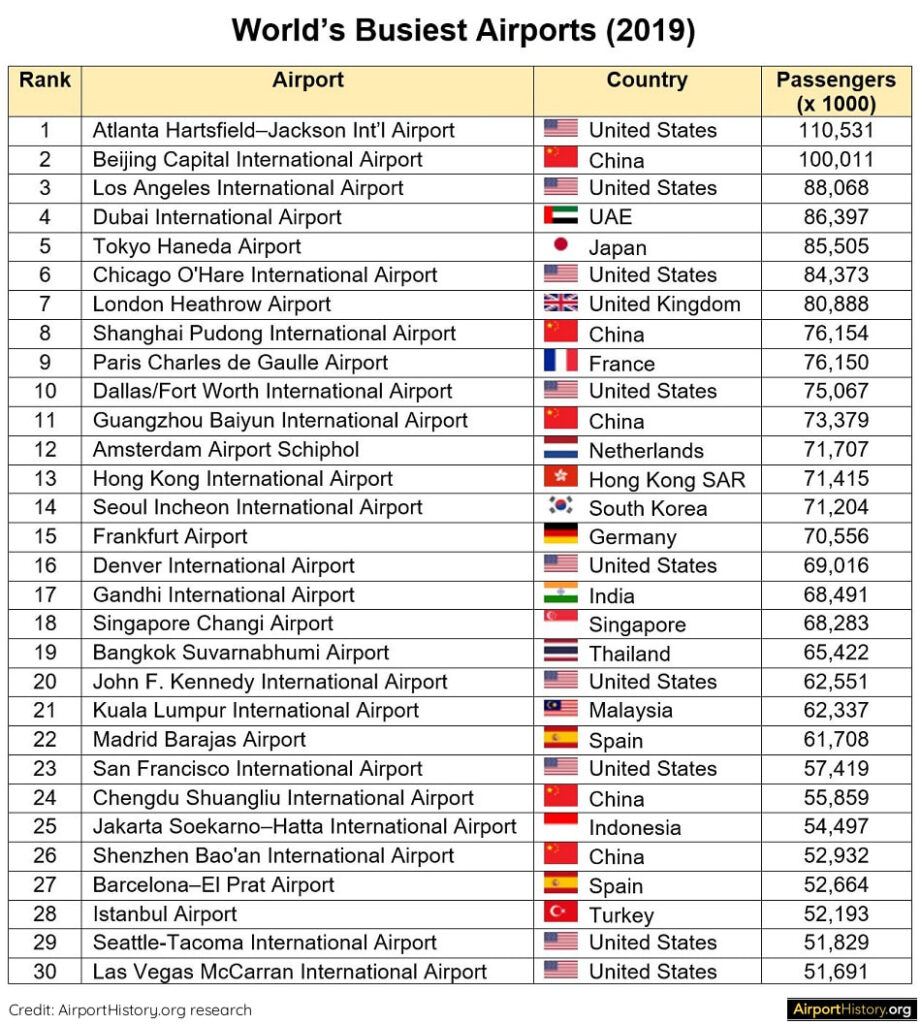
Air travel has become an essential fixture in the tapestry of global connectivity, facilitating commerce, tourism, and social interaction across continents. Each year, millions of passengers traverse the skies, converging upon various airports that serve as crucial nodes in this extensive network. The busiest airports in the world are not merely hubs of activity; they are microcosms of bustling human interaction, technological prowess, and logistical intricacies. In this article, we unveil the top ten busiest airports around the globe, highlighting their unique characteristics, operational strategies, and contributions to the aviation industry.
1. Hartsfield-Jackson Atlanta International Airport (ATL)
Often heralded as the world’s busiest airport, ATL seamlessly handles over 110 million passengers annually. Nestled in the heart of Georgia, this sprawling transportation hub serves as a primary gateway for domestic and international flights. Key features include its dual concourses, an expansive network of over 200 gates, and a commitment to sustainability, boasting initiatives that reduce its carbon footprint. The airport’s strategic location makes it a pivotal transfer point for travelers heading to various locations across North America and beyond.
2. Beijing Capital International Airport (PEK)
Serving as a primary hub for the Asian market, Beijing Capital boasts impressive passenger traffic, accommodating upwards of 100 million travelers yearly. This airport exemplifies modern architectural flair, featuring the striking Terminal 3, which stands as one of the largest airport terminals in the world. The Chinese government has invested heavily in upgrading this facility, thereby enhancing its operational efficiency, while a specialized cargo terminal caters to the burgeoning e-commerce demands of the region.
3. Los Angeles International Airport (LAX)
As an iconic representation of the American lifestyle, LAX is not just a bustling airport; it is an emblem of the Hollywood dream. Handling close to 90 million passengers annually, the airport is known for its myriad of dining and shopping options. With recent renovations aimed at modernizing the experience for travelers, LAX enhances its functionality with the implementation of innovative technology, benefiting both passenger flow and security processes, thereby ensuring a seamless journey.
4. Dubai International Airport (DXB)
A beacon of luxury and opulence, DXB serves over 80 million passengers each year. This airport is renowned for its sprawling duty-free shopping areas and luxurious amenities, which cater to the affluent traveler. With a focus on international connectivity, this airport acts as a major transit hub for Emirates Airlines. DXB’s commitment to innovative services has won it accolades as a leading global airport, with enhancements such as smart gates and extensive lounge facilities that redefine the travel experience.
5. Tokyo Haneda Airport (HND)
With a staggering passenger count of approximately 87 million, HND stands out for its proximity to central Tokyo, making it the favorite for domestic flights. This state-of-the-art airport prides itself on punctuality and efficiency, boasting an array of services designed to enhance the traveler’s experience. Haneda’s three terminals are characterized by their cleanliness and accessibility, and the airport continuously invests in technological advancements that facilitate a seamless flow of passenger movement.
6. O’Hare International Airport (ORD)
Standing at the crossroads of the United States, O’Hare is instrumental in connecting domestic and international air traffic. This airport welcomes about 80 million travelers each year and is celebrated for its operational intensity. A noteworthy feature of O’Hare is its committed focus on reducing flight delays through advanced air traffic control technology and collaborative scheduling with airlines. The airport’s rich history and continual infrastructural upgrades reflect its vital role in the evolution of air travel.
7. London Heathrow Airport (LHR)
As the primary airport serving the United Kingdom, Heathrow bears the distinction of being one of the largest international gateways in the world, with nearly 80 million passengers annually. Its strategic expansions reflect a dedication to accommodating growth in air travel demand. Renowned for its extensive flight network, particularly to North America and Asia, Heathrow delivers premium shopping and dining experiences, embodying elegance while prioritizing passenger comfort and efficiency in transit.
8. Hong Kong International Airport (HKG)
With a reputation for exceptional service quality, HKG undertakes the challenge of serving over 70 million passengers each year. Nestled on Lantau Island, this airport is a marvel of design and operations, featuring a state-of-the-art terminal and advanced logistics facilities catering to cargo needs. The airport prioritizes passenger experience through its myriad of amenities, including relaxation lounges and culinary showcases that reflect Hong Kong’s rich culinary heritage.
9. Shanghai Pudong International Airport (PVG)
An essential hub for travelers to and from China, PVG accommodates around 80 million passengers annually. The airport is recognized for its swift connections and advanced infrastructure. Modernization efforts have included the introduction of cutting-edge technology in its operations, such as automated check-in processes, which streamline the traveler journey, making it both efficient and user-friendly.
10. Amsterdam Schiphol Airport (AMS)
With approximately 71 million annual passengers, Schiphol serves as a key European hub, routing numerous international flights. Its unique feature as a single-terminal facility simplifies passenger navigation, while the airport is also famous for its art exhibits and extensive shopping options. Schiphol’s consistent investment in sustainability practices, such as its greenhouse gas reduction strategy, reinforces its commitment to being an environmentally responsible aviation leader.
In summary, the world’s busiest airports represent not only hubs of transportation but also centers of commerce, culture, and technological advancement. Each of these airports contributes uniquely to the global tapestry of air travel, showcasing a variety of features that cater to the diverse needs of modern travelers. From luxurious amenities to state-of-the-art technology, these airports continue to evolve, positioning themselves at the forefront of the aviation industry. As travel continues to grow in the coming years, these airports will remain vital arteries, ensuring seamless connectivity for millions across the globe.
FAQ
What is the busiest airport in the world?
Hartsfield-Jackson Atlanta International Airport (ATL) is the busiest airport in the world, handling over 110 million passengers annually.
Which airport has the largest terminal in the world?
Beijing Capital International Airport (PEK) features Terminal 3, one of the largest airport terminals globally.
What factors contribute to an airport being considered busy?
Passenger volume, number of flights, cargo traffic, and connectivity to domestic and international destinations are key factors.
How do major airports improve passenger experience?
Through technological upgrades, expanded amenities, efficient layouts, and sustainability initiatives.





Leave a Reply