
Short Answer
In a continent renowned for its rich tapestry of cultures, history, and traditions, the multitude of languages spoken adds another compelling layer to the European experience. As the political landscape of Europe evolves, language remains a defining marker of identity, heritage, and even aspiration. This examination of the ten most spoken languages in Europe not only serves to highlight their sheer prevalence but also to explore the underlying reasons for their prominence and the cultural narratives they carry.
1. English
With its roots in the Germanic languages, English has burgeoned into the most widely spoken language across Europe. Often perceived as a global lingua franca, it serves as a bridge connecting disparate cultures and communities. Its role as the primary language in various international organizations, combined with the United Kingdom’s historical dominance, has cemented English’s status. This prevalence speaks to Europe’s ongoing intersection with globalization and the desire for ubiquitous communication.
2. German
German stands tall as the second most spoken language in Europe. Its prominence can be attributed to Germany’s robust economic influence and its position as a leading power in the European Union. Moreover, German culture—encompassing literature, philosophy, and science—has long exerted a magnetic pull. For many, the language represents precision and depth, appealing to those interested in the tapestry of intellectual heritage it represents.
3. French
Once considered the language of diplomacy and high culture, French retains a significant position throughout Europe. It is not only the official language of several countries but also a cherished second language for many Europeans. This linguistic love affair can be traced back to historical influences, including the legacy of the French monarchy and its celebrated contributions to the arts and cuisine. French is spoken with an elegance that reflects its romanticism and artistry.
4. Italian
Italian is emblematic of romance and passion, capturing the essence of its cultural roots in every syllable uttered. With a vast influence stemming from Italy’s historical significance in art, music, and cuisine, it enchants speakers and learners alike. The language is also spoken throughout various regions in Switzerland and parts of Slovenia, creating a rich cultural mosaic in which Italian heritage thrives.
5. Spanish
Spanish, while often associated with Spain, boasts a wide network of speakers across Europe due to migration and cultural exchange. The language’s rhythmic cadence and expressive quality contribute to its appeal. Moreover, Spain’s vibrant culture—characterized by literature, music, and culinary delights—has helped propagate Spanish as a preferred second language among many Europeans. The connections forged through language help illuminate the deeper ties that bind the people of Europe.
6. Polish
Polish has emerged as a significant player among the languages of Europe, particularly as a result of immigration and the presence of a vibrant Polish community throughout the continent. As a West Slavic language, its complexity and unique phonetics set it apart. The resilience of the Polish language, reflective of its tumultuous history, symbolizes a tenacity that resonates with many who value cultural heritage and identity.
7. Russian
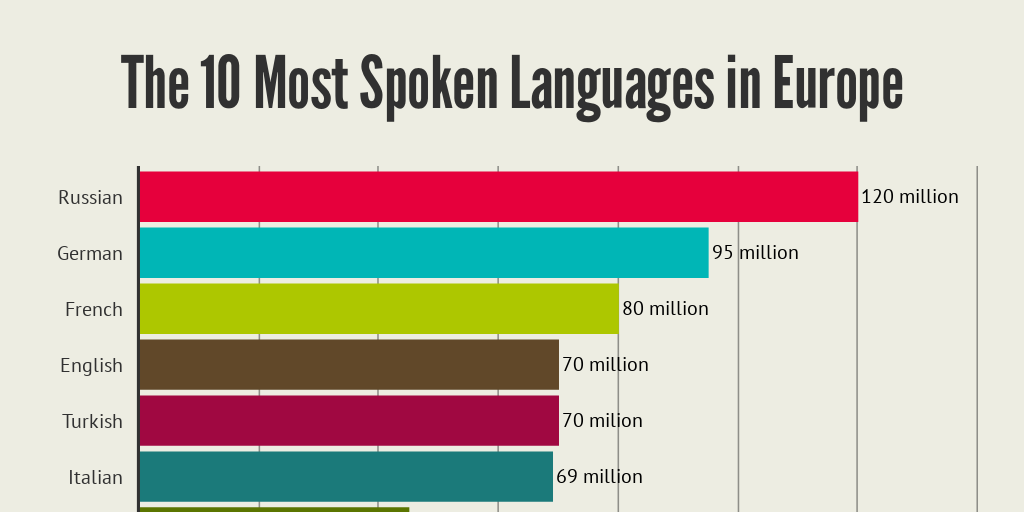
Despite predominant use in the eastern reaches of Europe, Russian remains a fascinating element in Europe’s linguistic repertoire. As the largest native language in Europe, its historical weight carries substantial cultural significance. Spoken by millions across multiple countries, Russian embodies a connection to a unique literary and philosophical tradition, often capturing the imagination of those drawn to its artistic depth.
8. Dutch
Dutch, primarily spoken in the Netherlands and Belgium, is a language that showcases the melding of historical influences and modernity. It is characterized by its distinctive sounds that some may find tricky yet intriguing. The linguistic undercurrents in Dutch signify a blend of cultural nuances, making it a vital component in understanding the mechanics of communication in the Benelux region and beyond.
9. Ukrainian
Ukrainian, while regionally confined to Ukraine, carries profound implications for discussions on identity, nationalism, and heritage in Europe. The current geopolitical dynamics magnify its significance as a symbol of resilience. Its lyrical quality and rich folk traditions offer an inviting portal into the heart of Eastern European culture and identity, gaining recognition as the diaspora grows in various European settings.
10. Romanian
Romanian, a Romance language with Latin roots, is unique within the Slavic-dominated Eastern Europe. Its distinctiveness is often noted for its blend of linguistic influences, reflecting centuries of conquests and trade. It serves as a linguistic testament to the country’s history and its current role within the European community. The warmth embedded in the Romanian language resonates with speakers, drawing interest from many who see it as a thread connecting them to their Latin, yet distinct, heritage.
In conclusion, the linguistic landscape of Europe is a microcosm of its history, culture, and social dynamics. The prevalence of these ten languages serves as a testament to the diverse identities flourishing within the continent. As English, German, French, and others dominate, we see reflections of power dynamics, migration trends, and cultural exchanges at play. This rich linguistic diversity not only enhances interpersonal connections but also invites a broader understanding of what binds and separates the peoples of Europe, underscoring the timeless allure of language as a powerful tool of expression and connection.
FAQ
What are the most spoken languages in Europe?
The most spoken languages in Europe include English, German, French, Italian, Spanish, Polish, Russian, Dutch, Ukrainian, and Romanian.
Why is English the most spoken language in Europe?
English is the most spoken language in Europe due to its global lingua franca status, historical influence from the United Kingdom, and its use in international organizations.
How do migration and cultural exchange influence the languages spoken in Europe?
Migration and cultural exchange have contributed to the spread of languages such as Spanish and Polish across different European countries, reflecting demographic shifts and cultural interactions.
What is the significance of Russian in Europe?
Russian is the largest native language in Europe, especially in the eastern regions, and carries substantial cultural and historical importance.
How does the linguistic diversity of Europe reflect its culture?
Europe’s linguistic diversity mirrors its rich history, cultural traditions, social dynamics, and the interplay of power, migration, and identity across the continent.





Leave a Reply