
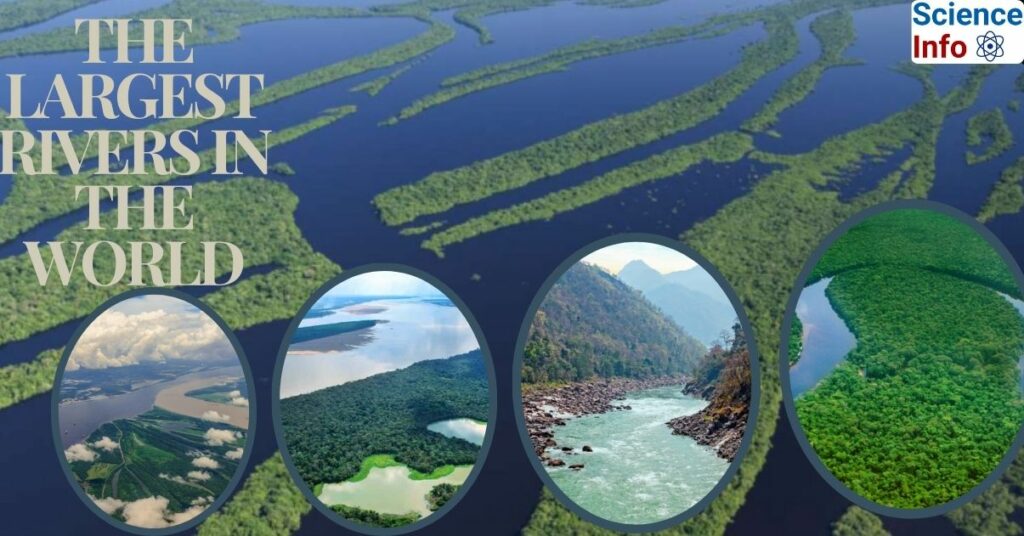
Short Answer
Rivers have long been regarded as the lifeblood of civilizations, serving as crucial arteries that nourish ecosystems, facilitate trade, and inspire cultures throughout history. Their winding paths, diverse landscapes, and vast expanses evoke a sense of awe and respect, revealing both nature’s majesty and humanity’s reliance on these watercourses. The grandeur of rivers is not just in their dimensions but also in the stories they tell. Here, we delve into the top ten largest rivers in the world, exploring their unique attributes and the reasons they capture our fascination.
1. Amazon River
Flowing through the lush expanse of South America, the Amazon River is not just the longest river but also the most voluminous. Spanning approximately 4,345 miles, it traverses multiple countries, including Brazil, Peru, and Colombia. This river discharges an astonishing volume of water, accounting for roughly one-fifth of the world’s freshwater supply that pours into the oceans. The Amazon’s basin is a critical sanctuary of biodiversity, housing an incredible array of flora and fauna. The blend of vast ecosystems and indigenous cultures living harmoniously along its banks makes the Amazon a subject of endless fascination.
2. Nile River
The Nile, renowned for its historical significance to ancient civilizations, especially in Egypt, stretches about 4,135 miles. This river has traditionally been viewed not merely as a waterway but as a pivotal provider of life, supporting agriculture and trade for millennia. The Nile flows through various landscapes, from the snow-capped mountains of Ethiopia to the arid deserts of Egypt, showcasing remarkable contrasts. The river’s cultural heritage, including the Pyramids and the Sphinx, culminates in a tapestry woven with narratives of resilience and innovation.
3. Yangtze River
The Yangtze River, China’s longest river at approximately 3,917 miles, is a critical component of the nation’s economy. Flowing from the Tibetan Plateau to the East China Sea, it supports more than a third of China’s population. Beyond its utilitarian aspects, the Yangtze carries profound spiritual significance in Chinese culture and folklore. The river’s stunning gorges and breathtaking scenery also attract adventurers and tourists, offering both a striking panorama and a glimpse into the rich traditions emerging from its shores.
4. Mississippi-Missouri River System
This mighty river system in North America, measuring about 3,902 miles, constitutes the fourth largest river system in the world. The Mississippi, notorious for its historical role in trade and exploration, flows from its source in Minnesota down to the Gulf of Mexico. The confluence of the Mississippi and Missouri rivers symbolizes convergence, both geographical and cultural, influencing settlements and economic developments for centuries. Its intricate ecosystem, teeming with wildlife, supports a vibrant fishing industry that is integral to regional cultures.
5. Yenisei River
Spanning approximately 3,445 miles, the Yenisei flows predominantly through Siberia, Russia. This river is notable for its dramatic scenery, surrounded by untouched wilderness and rugged mountains. The Yenisei’s waters contribute to significant hydroelectric power generation and serve as a transportation route in a primarily inhospitable region. The river’s seclusion offers a unique glimpse into the unspoiled natural beauty of Siberia, enriching our understanding of remote ecosystems and their conservation.
6. Yellow River (Huang He)
China’s second-longest river, the Yellow River, rivers for about 3,395 miles. Known as the cradle of Chinese civilization, it has nourished countless dynasties. This river is often associated with both life and tragedy; its unpredictable flooding has shaped the landscape and sowed agricultural prosperity while also causing devastation. The Yellow River embodies a rich historical narrative, reflecting the interplay between human endeavor and nature’s caprices, rendering it a site of profound reverence and caution.
7. Obi River
Flowing through western Siberia, the Obi River extends approximately 3,650 miles, eventually draining into the Arctic Ocean. Its vast delta is a critical habitat for diverse wildlife, including migratory birds, playing a vital role in the regional ecology. Historically, the river provided an essential trade route, linking various communities. The icy landscapes and the river’s meandering path evoke a sense of exploration and adventure, capturing the imaginations of those enchanted by Russia’s expansive wilderness.
8. Congo River
The Congo River winds approximately 2,920 miles through Central Africa, known for its deep waters and extensive rainforests. It is the world’s second-largest river by discharge volume, showcasing a unique interplay of biodiversity and cultural heritage. The river’s basin is home to an array of wildlife, some of which are endemic to the region. Its complex network of tributaries offers an intricate mosaic that reveals the challenges and beauty of sustainable development in a biodiverse environment.
9. Amur River
Forming part of the border between Russia and China, the Amur River measures about 2,763 miles. This river is significant for its wildlife richness and ecological diversity, supporting environments that harbor rare species. The Amur’s serene landscapes juxtaposed with the tumultuous history of the regions it traverses impart a deep sense of contemplation, inviting reflection on the multifaceted human-nature relationship shaped by geography.
10. Lena River
Finally, the Lena River, with a length of around 2,734 miles, flows through Siberia and empties into the Arctic Ocean. It is known for its dramatic landscapes and ecological significance, nourishing the surrounding tundra and taiga ecosystems. The Lena is a symbol of the Russian frontier, representing the resilience and adaptability of life in one of the world’s harshest climates. Its winding course through remote territories paints a picture of unadulterated nature and humanity’s pursuit of knowledge in the face of adversity.
In conclusion, the allure of the world’s largest rivers lies not only in their physical grandeur but also in the myriad stories they convey about human existence, nature’s power, and the delicate balance between the two. From the mythos surrounding the Nile to the ecological diversity of the Amazon, these rivers transcend mere geography. They continue to be vital to civilizations, influencing cultures and economies while inspiring generations to explore their depths.
FAQ
What is the longest river in the world?
The Amazon River is considered the longest river in the world, spanning approximately 4,345 miles.
Which river has the largest volume of water discharge?
The Amazon River discharges the largest volume of water, accounting for about one-fifth of the world’s freshwater supply that flows into the oceans.
Why are rivers important to civilizations?
Rivers have historically been vital for supporting agriculture, trade, transportation, cultural development, and sustaining diverse ecosystems.
What is the significance of the Nile River?
The Nile River is historically significant for supporting ancient civilizations in Egypt, enabling agriculture, trade, and cultural achievements for millennia.






Leave a Reply