
Short Answer
Africa, a continent draped in vibrant cultures and rich histories, is not just a tapestry woven from the threads of tradition and diversity; it is also a burgeoning powerhouse in the global economy. Each nation, a unique thread, contributes to a grand tapestry teeming with potential and innovation. As the world increasingly turns its gaze towards Africa, understanding the economic hierarchy of its nations is paramount. Here, we explore the top 10 largest economies in Africa, each operating like a cog in a vast machine, driving growth, ingenuity, and resilience.
1. Nigeria
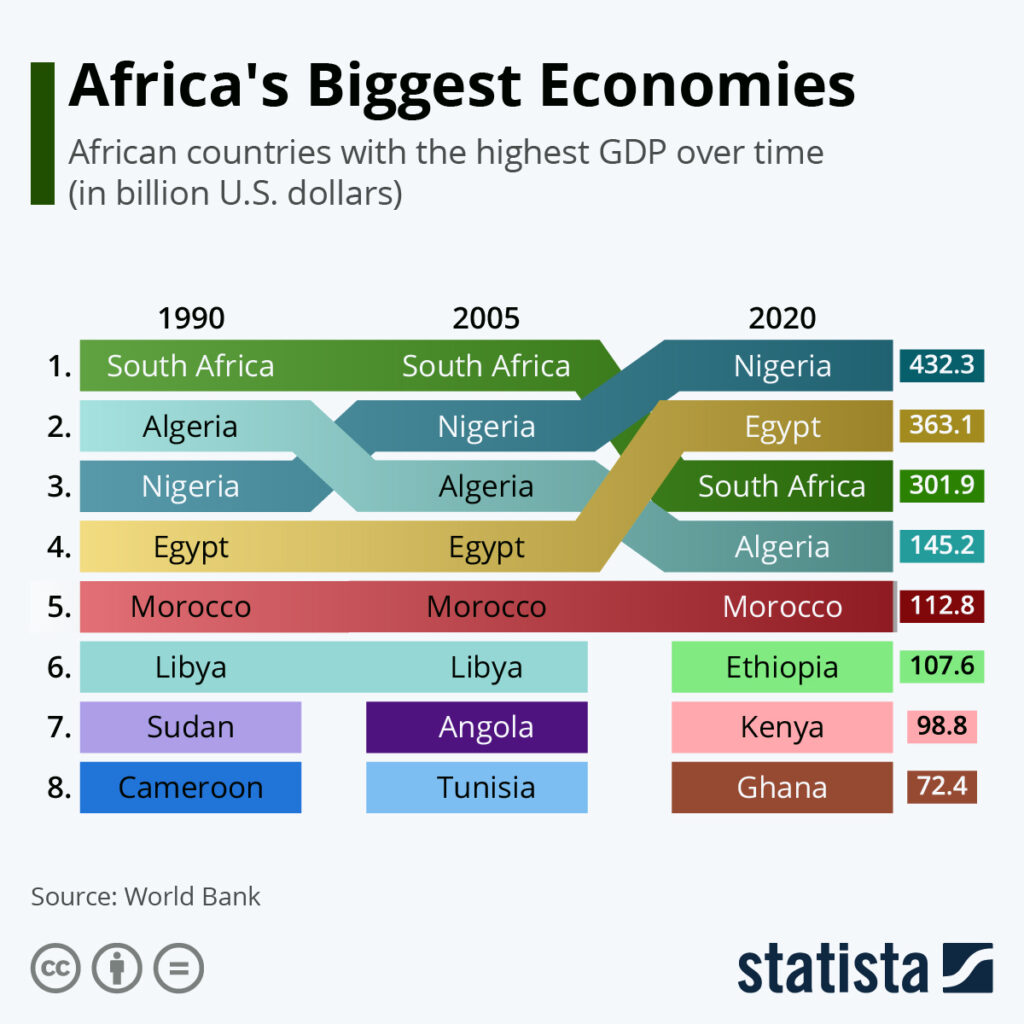
Leading the pack is Nigeria, often seen as Africa’s giant due to its immense resources and youthful populace. With a Gross Domestic Product (GDP) that exceeds $450 billion, the country is akin to a roaring river, carving its path through the continent’s economic landscape. Rich in oil, natural gas, and agricultural products, Nigeria’s wealth is bolstered by the hustle of its vibrant markets and the entrepreneurial spirit of its citizens. In recent years, however, the nation has faced the challenges of economic diversification, urging it to venture beyond its oil dependence.
2. South Africa
Next on the roster is South Africa, a country often likened to a kaleidoscope—an ever-changing blend of cultures, industries, and landscapes. Its GDP, hovering around $350 billion, is buoyed by a robust financial sector, mining, and agriculture. With cities like Johannesburg serving as economic hubs, South Africa is a beacon for investment, innovation, and cultural exchange. The nation operates under the specter of economic inequality, yet it persists, striving to harness its potential for a more inclusive future.
3. Egypt
Egypt, the land of the pharaohs, stands as a testament to enduring brilliance with a GDP close to $300 billion. This nation is steeped in history, yet its economic practices drive it forward into the modern era. The Suez Canal, an artery of global trade, underscores Egypt’s strategic significance, facilitating the movement of goods between continents. Moreover, a burgeoning tourism sector adds to its wealth, painting the country as a mélange of ancient marvels and contemporary enterprise.
4. Algeria
In the shadows of the Sahara lies Algeria, quietly amassing power with its significant oil and gas reserves. With a GDP around $200 billion, Algeria is like a calm oasis in a seemingly arid landscape, where hydrocarbons are the primary water source. The country aims to diversify its economy, particularly through agriculture and renewable energy, ensuring resilience against the fluctuations of global oil prices. This deliberate action reflects a commitment to sustainability and growth.
5. Ethiopia
Emerging rapidly, Ethiopia is not just an ancient civilization but also a noteworthy economic contender with a GDP of approximately $150 billion. Often likened to a phoenix rising from the ashes, the country has witnessed robust agricultural growth, coupled with significant investments in infrastructure. The Ethiopian government is keenly aware of its youthful demographic, which serves as both a challenge and an opportunity, propelling the nation towards industrialization and modernization.
6. Kenya
Kenya, the jewel of East Africa, boasts a GDP nearing $100 billion and operates as an economic gateway for the region. Its vibrant agricultural sector, known for exports like tea and coffee, fuels an entrepreneurial ethos that resembles a garden in full bloom. The rise of technology hubs, particularly in Nairobi, showcases an embrace of innovation that exemplifies Kenya’s adaptability. The nation is orchestrating a transition towards a digital economy, ensuring its place on the global stage.
7. Tanzania
Tanzania stands proudly, its GDP surpassing $60 billion, presenting itself like the majestic Mount Kilimanjaro—firm, imposing, and full of promise. With abundant natural resources, including gold and natural gas, Tanzania is poised for growth. Efforts to enhance agricultural productivity alongside burgeoning tourism—showcasing the serengeti’s wildlife and Zanzibar’s allure—underscore a commitment to leveraging its assets for sustainable development.
8. Ghana
Known as the Gold Coast, Ghana dazzles with a GDP of over $50 billion, embodying a resilient spirit that rises from its rich colonial history. The country’s burgeoning oil and gas sector complements its established cocoa industry, creating a multifaceted economy reminiscent of a well-tended orchard, ripe for harvesting. Additionally, Ghana’s political stability and commitment to democratic governance make it a haven for investors seeking potential.
9. Mozambique
With a GDP nearing $40 billion, Mozambique is a country of burgeoning dreams, where natural gas discoveries could ignite an economic transformation. The coastline, adorned with pristine beaches, beckons tourism, while agriculture remains foundational. This duality forms a promising narrative—one of natural wealth and cultural richness, ready to be harnessed for future prosperity.
10. Angola
Finally, Angola unfolds like a tapestry of history with a GDP just above $30 billion. Rich in oil deposits, the country aims to stabilize its economy by diversifying into sectors such as agriculture and tourism. Despite past turbulence, Angola’s scars serve as reminders of resilience, and its efforts to build a sustainable economic pathway display hope for a brighter future.
In summary, the economic landscape of Africa is as diverse and dynamic as its population. Each nation, with its unique resources and challenges, exemplifies a chapter in the continent’s quest for growth and stability. As these economies evolve, they not only carve a niche in the global market but also weave together a rich narrative of ambition and resilience that beckons the world to take notice.
FAQ
What is the largest economy in Africa?
Nigeria is the largest economy in Africa with a GDP exceeding $450 billion, driven primarily by oil, natural gas, and agriculture.
Which African countries have the fastest growing economies?
Ethiopia and Kenya are among the fastest growing economies in Africa due to investments in infrastructure, agriculture, and technology.
What are the main industries driving Africa’s largest economies?
Key industries include oil and gas (Nigeria, Algeria, Angola), mining (South Africa, Tanzania), agriculture (Kenya, Ghana), and tourism (Egypt, Tanzania).
Why is economic diversification important for African economies?
Diversification helps African countries reduce dependence on volatile commodities like oil, enabling more sustainable and resilient economic growth.




Leave a Reply