
Short Answer
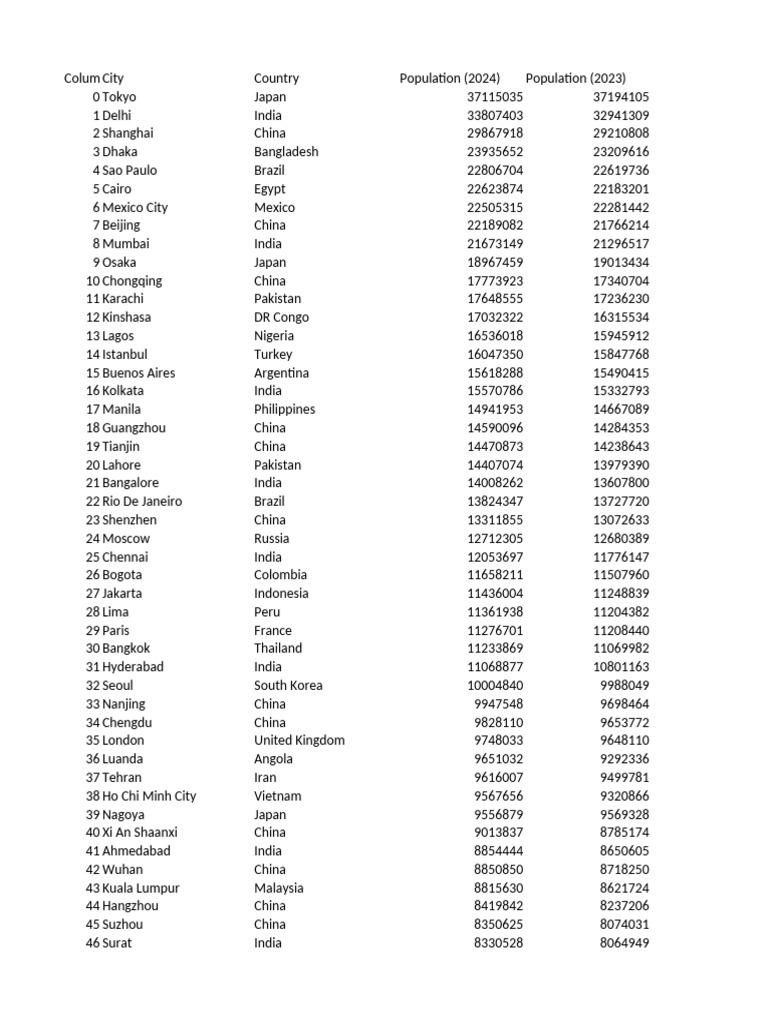
In a world bustling with humanity, cities emerge not merely as clusters of buildings and streets but as vibrant tapestries woven from diverse cultures, ideas, and dreams. Each of the largest cities by population encapsulates a unique spirit, a microcosm of modern civilization that pulsates with life. Here, we explore the top ten largest cities on the globe, examining their distinctive essence and what draws millions to their bustling embrace.
1. Tokyo, Japan
Tokyo, the bewitching capital of Japan, stands as a venerable titan among cities. With a staggering population exceeding 37 million, it is not just a metropolis; it is the epitome of a modern-day labyrinth. Tokyo’s streets are a symphony of neon lights and quiet temples, where the traditional coexists harmoniously with the avant-garde. From the serene beauty of the Shinjuku Gyoen National Garden to the frenetic energy of Shibuya Crossing, Tokyo may feel like the beating heart of the world, forever inviting exploration and discovery.
2. Delhi, India
In the kaleidoscopic tapestry of India, Delhi emerges as a grand tapestry of history and innovation, harboring a population of over 31 million. This city is a cacophony of sounds and colors, where ancient ruins share the landscape with modern skyscrapers. Every corner of Delhi whispers tales of the Mughal Empire, reflecting its opulent past through monuments such as the Red Fort and Humayun’s Tomb. Yet, simultaneously, it races into the future, bolstered by a burgeoning tech sector that attracts both dreamers and doers.
3. Shanghai, China
As China’s most populous city, Shanghai epitomizes the relentless drive toward growth and modernization, boasting a population of around 26 million. This vibrant port city stands as a gateway between East and West, where the old-world charm of the Bund meets the futuristic skyline of Pudong. The city’s pulse can be felt in its dynamic local markets, the frenetic pace of the Maglev train, and its cultural institutions that curate an astonishing array of art and history. Shanghai is a testament to resilience and a harbinger of what cities of the future can achieve.
4. São Paulo, Brazil
With nearly 22 million residents, São Paulo stands as a colossal titan in South America, a sprawling paradigm of cultural amalgamation. The city is a feast for the senses, where the aromas of diverse culinary delights intermingle, telling the story of its rich immigrant history. Art thrives here, with the graffiti-laden streets serving as canvases for expression and reflection, while the lure of its nightclubs and music festivals pulses through its veins. São Paulo is a vivid embodiment of the romance and chaos that characterize urban life.
5. Mexico City, Mexico
Plunging into the heart of Mesoamerica, Mexico City welcomes around 21 million souls into its warm embrace. This sprawling urban oasis boasts a rich tapestry of history, with ancient Aztec ruins nestled among colonial architecture and contemporary art spaces. The city’s vibrant neighborhoods, from the bohemian streets of Coyoacán to the upscale charm of Polanco, reflect its multifaceted identity. Here, time seems fluid; the echoes of the past dance alongside the rhythms of modernity, creating an ever-evolving narrative.
6. Cairo, Egypt
Standing proud alongside the timeless banks of the Nile, Cairo, with its population of approximately 20 million, is a beacon of ancient civilization. The city is a living testament to human history, where the awe-inspiring pyramids of Giza rise majestically against a backdrop of contemporary life. Cairo’s markets, labyrinthine alleyways, and vibrant street life form a mosaic of cultural richness that embodies the spirit of its people. Amidst the modern hustle, one can still trace the threads of pharaonic grandeur, making Cairo a mesmerizing destination.
7. Dhaka, Bangladesh
With an astonishing population nearing 20 million, Dhaka is both a dream and a dilemma. Known as the “City of Mosques,” it bursts at the seams with human creativity and tenacity, where innovative entrepreneurs carve out a place in an ever-evolving economy. The vibrant colors of its textiles and the palpable energy of its street life blend into a vivid panorama. Amidst the challenges of urban growth, Dhaka’s resilience fosters a unique culture that is both lively and unyielding.
8. Kolkata, India
Kolkata, once the jewel in the crown of the British Empire, now stands as a rich cultural heart of India, teeming with about 14 million inhabitants. Known as the city of joy, it resonates with literature, art, and cuisine that reflect a collective passion for life. Its colonial architecture flirts with modernity, and the festival of Durga Puja transforms the city into a spectacle of devotion and creativity. Kolkata whispers the poetry of its past while beckoning forward with exuberance and vigor, encapsulating the essence of the human spirit.
9. Istanbul, Turkey
At the confluence of Europe and Asia, Istanbul, with over 15 million residents, is a city that embodies a profound historical dichotomy. As a livable museum, where Byzantine churches stand sentinel beside Ottoman mosques, it presents a tapestry of cultural richness. The Bosphorus strait snakes through the city, offering fleeting moments of serenity amidst the urban clamor, while its vibrant bazaars create a sensory symphony of taste, sound, and sight. Istanbul stands as a bridge, connecting eras, cultures, and dreams.
10. Karachi, Pakistan
With a population of approximately 14 million, Karachi is a swirling tempest of energy and industrious vigor. As Pakistan’s largest city, it serves as a sprawling economic powerhouse, fueled by a diverse populace that brings dynamism and resilience. The city pulsates with life, from its bustling ports and markets to its burgeoning arts scene. Karachi is not just a city; it is a tapestry woven with aspirations, struggles, and triumphs, embodying the spirit of a nation on the verge of limitless potential.
In weaving through these vibrant tapestries of humanity, it becomes clear that the largest cities in the world reflect more than just numbers; they are a celebration of cultural diversity and aspirations. Each city, with its unique stories, inspires us with the profound ways in which human beings adapt, innovate, and dream. As we traverse the urban landscapes, we bear witness to the undeniable truth: cities are not merely built; they are incrementally crafted from the collective hopes of their inhabitants, each contributing to the grand narrative of human civilization.
FAQ
What is the population of Tokyo, the largest city in the world?
Tokyo has a population exceeding 37 million people, making it the largest city by population globally.
Which continents are represented in the top 10 largest cities list?
The top 10 largest cities are located across Asia, South America, Africa, and Europe.
Are the population figures based on city proper or metropolitan area?
The article generally references metropolitan area populations, which include the urban core and surrounding suburban areas.


Leave a Reply