
Short Answer
In the vast expanse of our blue planet, where the sky whispers secrets of ancient journeys and dreams of flight, there exists a striking variety of avian wonders. Among them, certain species have committed themselves to ascending the highest altitudes, challenging the very limits of life itself. These are the highest flying birds in the world, feathered titans who glide through the rarefied atmosphere, and whose existence feels almost ethereal. Their realms, cloaked in clouds and kissed by the sun, are a testament to nature’s audacious creativity. Join us as we soar through the ten highest-flying birds, exploring their unique appeal and the mysteries of their lofty lives.
1. The Rüppell’s Griffon Vulture
Soaring gracefully at altitudes reaching 37,000 feet, the Rüppell’s Griffon Vulture is a master of the skies, possessing an unmatched ability to navigate the thermals of high mountains. This avian titan is adorned with a majestic, pale plumage, juxtaposed against a striking black neck ruff—a crown of feathers that signals its regal nature. When this bird descends, it resembles a living silhouette, effortlessly mapping the contours of the earth below. In the bird world, it is both a scavenger and a yielder, symbolizing resilience in the face of unforgiving elements.
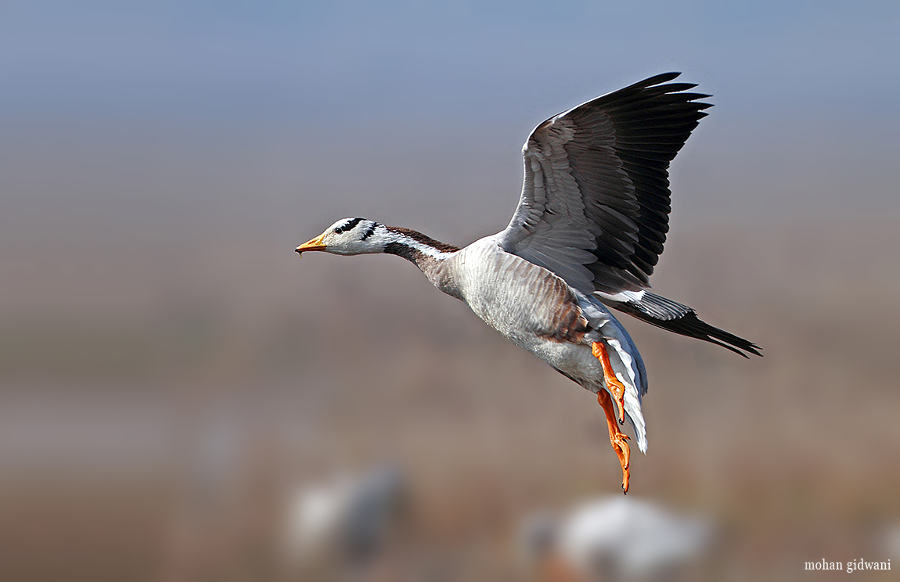
2. The Bar-headed Goose
Born to conquer the Himalayan heights, the Bar-headed Goose is an intrepid traveler, often recognized for its astounding migration over the world’s tallest mountain range. With wings that slice through the thin air like a fine blade, these geese soar at elevations exceeding 30,000 feet. Their delicate yet strong physique is emblematic of nature’s ability to form marvels suited for extremes. As they fly above the clouds, they carry with them tales of traversing daunting landscapes, a poignant reminder of the enduring spirit of life.
3. The Andean Condor
With a wingspan that can reach up to 10 feet, the Andean Condor epitomizes both power and grace. This giant of the skies, gliding at altitudes of around 15,000 feet, holds the responsibility of keeping a microscopic balance in its ecosystem as a scavenger. Its majestic presence captures the very essence of the Andean heart—stoic mountains, deep valleys, and tumultuous winds. The condor, draped in rich black and white feathers, symbolizes freedom and longevity, soaring with a patience that hints at the wisdom of ages.
4. The Himalayan Vulture
Elevated high among its peers, the Himalayan Vulture spreads its wings, riding the tumultuous air currents of the subcontinent. Reaching heights around 26,000 feet, this bird is both a keen observer of the land below and a vital cog in the ecological machine. It is adorned in feathers that mirror the earth and sky; its silhouette often becomes a fleeting thought in the minds of mountain trekkers. The Himalayan Vulture is nature’s harbinger of change, guiding the way from life to the inevitable return to dust.
5. The Common Crane
The Common Crane is an elegant harbinger of the skies, capable of reaching altitudes of approximately 30,000 feet during its migrations. Known for their intricate and captivating courtship dances, these birds embody grace with their long legs and strikingly slender necks. Their wide wingspan allows them to glide, painting arcs against the sunset. As they call to one another in low, ringing tones, they foster connections that resonate across the landscape, creating a reverberation of communal strength and unity.
6. The White Stork
This avian traveler, the White Stork, renowned for its impressive migratory journeys, can climb to altitudes of around 20,000 feet. With their striking black and white plumage, they not only bring a touch of elegance but are also deeply woven into human culture, symbolizing hope and renewal. As they navigate their seasonal routes, their graceful ballet across the sky serves as a metaphor for the enduring cycle of life and the inevitability of change, enticing dreamers to lift their eyes and follow.
7. The Egyptian Vulture
With a penchant for the surreal, the Egyptian Vulture navigates the skies in search of whimsically discarded treasures. It is known to fly at altitudes of approximately 15,000 feet, often using tools to extract tasty morsels from tortoise shells. Draped in a resplendent yellowish-white coat with striking black wing-tips, this peculiar creature is a reminder of nature’s curiosity, reflecting innovation and tenacity. Naming the Egyptian Vulture is akin to summoning a spirit of resourcefulness from the archives of antiquity, as they have been revered since the days of the pharaohs.
8. The Black Kite
Auburn feathers radiate from the Black Kite, an agile and clever hunter that soars gracefully to heights of 10,000 feet or more. This bird’s adaptability in various ecosystems makes it a beacon of versatility, shadowing waterways and urban landscapes alike. From their vantage point, they survey their environment, connecting them to the complex tapestry of life below. In a world where survival is paramount, the Black Kite emerges as a clever strategist—an aerial chess player with a keen eye for opportunities.
9. The Eurasian Eagle Owl
Flying at altitudes of around 10,000 feet, the awe-inspiring Eurasian Eagle Owl carries with it an aura of mystery. With its large, owl-like features and piercing yellow eyes, it encapsulates the balance between the serene and the predatory. As a nocturnal raptor, this bird often uses its prowess to hunt in the twilight. It exemplifies the duality of nature, merging grace with ferocity, captivating the hearts of those who venture into the darkened woods.
10. The American Woodcock
While typically residing at lower elevations, the American Woodcock may surprisingly launch into heights of up to 8,000 feet during its spectacular mating flights. This petite bird, with its unique bobbing courtship display, transcends realms, creating an unforgettable connection between the earth and the sky. The mesmerizing patterns of their zigzagged flight serve as a metaphor for the unpredictable essence of love, weaving through the night and illuminating the hearts of observers.
As we conclude our exploration of these remarkable avian navigators, we are left with a profound sense of wonder. Each bird, with their unique adaptations and characteristics, serves as a reminder of the earth’s boundless diversity. They inspire us to dream, to reach for our highest selves, even as they conquer the heights above. In the parable of existence, these winged wonders are not just inhabitants of the skies, but rather, eternal symbols of the tenacity of life and the unquenchable human spirit yearning for exploration.
FAQ
What adaptations help birds fly at high altitudes?
Birds flying at high altitudes have adaptations like enhanced lung capacity, specialized hemoglobin for oxygen transport, larger wingspans for efficient gliding, and strong flight muscles.
Which bird holds the record for the highest flight?
The Rüppell's Griffon Vulture holds the record, soaring up to 37,000 feet.
Are all high flying birds migratory?
Many high flying birds migrate to exploit seasonal resources and favorable climates, but some like vultures also use high altitudes for scavenging.






Leave a Reply