
Short Answer
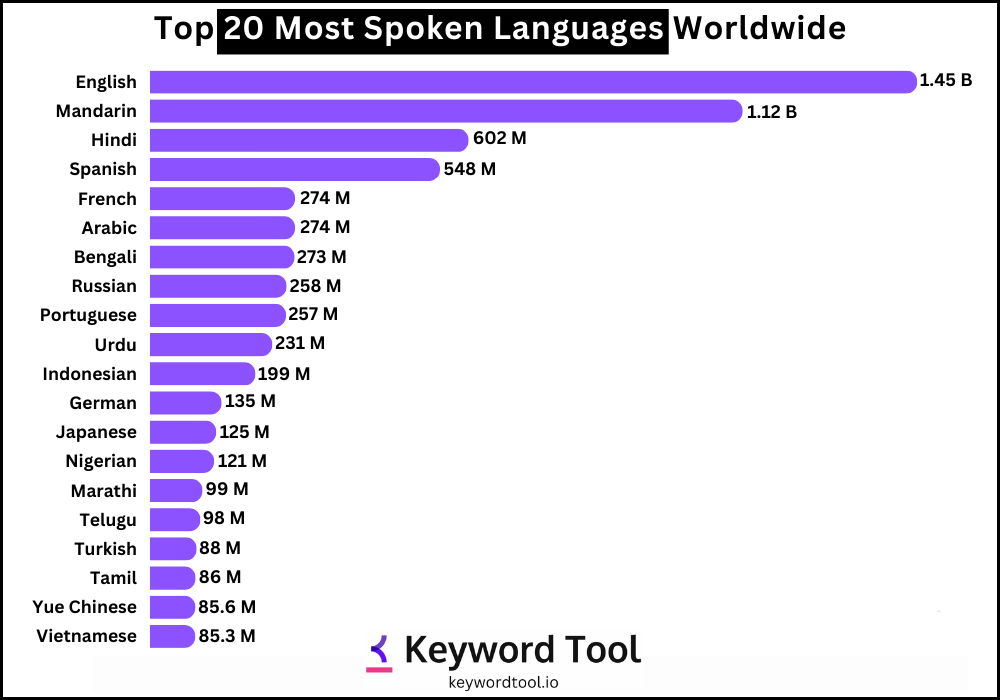
The world is an exquisite tapestry woven from a multitude of languages, each thread colored with the vibrancy of its speakers’ cultures, histories, and aspirations. Language serves not merely as a vehicle for communication but as a profound reflection of human identity and societal structure. In a globalized world, understanding the dynamics of the most spoken languages illuminates significant cultural intersections and socio-economic trends. Let us embark on an exploration of the top ten most spoken languages worldwide, delving into the nuances of each and the deeper reasons why they hold such intrigue.
1. Mandarin Chinese
With over a billion native speakers, Mandarin Chinese reigns supreme as the most spoken language globally. Its tonal nature, comprising various dialects, offers a unique linguistic challenge. The fascination with Mandarin often stems from China’s rich history, civilization, and rapid economic growth, making it a pivotal language in international business and diplomacy. The complexities of Chinese characters, coupled with the intricacies of its phonetic system, provide an alluring gateway into an ancient culture that continues to evolve.
2. Spanish
Spanish, with approximately 460 million native speakers, is the second most spoken language, resonating across Spain, Latin America, and parts of the United States. Its melodic cadence and rhythmic flow are captivating to many learners. The global appeal of Spanish can be attributed to cultural phenomena such as music, film, and literature. From the sultry sounds of flamenco to the passionate narratives of Gabriel García Márquez, Spanish is a language that embodies variations of identity and profound cultural richness.
3. English
English is often touted as a global lingua franca, serving as a bridge for communication in myriad contexts—from business to technology and diplomacy. With around 380 million native speakers and an expansive number of non-native speakers, English offers a broad canvas for diverse expressions and exchanges. The fascination with English can be traced to the historical influence of the British Empire and the contemporary dominance of American culture through entertainment, literature, and innovation, shaping global dialogues and interactions.
4. Hindi
Approximately 340 million people speak Hindi, primarily in India and Nepal, making it the fourth most spoken language. Its script, Devanagari, is a beautiful representation of its rich literary tradition. The allure of Hindi lies not only in its linguistic features but also in the cultural tapestry of Bollywood films, classical music, and vast literary contributions. This language embodies the complexity of Indian society and serves as a symbol of unity in a country teeming with linguistic diversity.
5. Arabic
Arabic, with around 310 million speakers, is a language steeped in history and spirituality. Its dialectal variations indicate the rich cultural landscapes across the Arab world. The connection between Arabic and Islam showcases the language’s profound significance, serving as the medium for the Quran, thus elevating its status beyond mere communication. The elegance of Arabic script combined with its multifaceted vocabulary contributes to its poetic beauty, drawing fascination from linguists and enthusiasts alike.
6. Bengali
With approximately 230 million speakers, Bengali is the official language of Bangladesh and a prominent language in India. Its lyrical quality is often celebrated in literature, notably through the works of Rabindranath Tagore, the first non-European Nobel laureate in literature. The allure of Bengali lies in its cultural heritage; the festivals, cuisine, and artistic expressions rooted in this language create a vibrant social fabric, reflecting the deep connection between language and identity.
7. Portuguese
Portuguese is spoken by around 220 million people, primarily in Portugal, Brazil, and parts of Africa. The language’s global footprint is a testament to the far-reaching effects of maritime exploration and colonization. The lyrical sounds of Portuguese, particularly in Brazilian music and literature, enamor many. With influences from African and Indigenous languages, Portuguese serves as a vivid example of cultural amalgamation, illustrating how languages evolve and adapt over time.
8. Russian
Russian, the most widely spoken Slavic language, boasts roughly 150 million speakers. Its complex grammatical structures challenge learners but also enrich communication. The fascinating aspect of Russian is its literary heritage, with iconic authors such as Leo Tolstoy and Fyodor Dostoevsky. The language is not only a means of communication but also a portal into a profound cultural and intellectual legacy, illustrating the resilience and depth of Russian identity.
9. Japanese
With around 130 million speakers, Japanese offers a unique linguistic landscape characterized by its intricate writing systems—hiragana, katakana, and kanji. The cultural fascination with Japanese is deeply rooted in its historical evolution, traditional arts, anime, and technological innovation. The careful nuances and levels of politeness embedded in the language provide insights into Japanese society’s values and social structures, capturing the interest of learners around the globe.
10. Punjabi
Punjabi, spoken by approximately 125 million people, is a vibrant language principally found in India and Pakistan. The script, Gurmukhi, is a symbol of the cultural identity of the Sikh community. Punjabi music, particularly Bhangra, and its rich literary traditions add to its allure, showing how language can shape and reflect community values and experiences. The warmth and dynamism of Punjabi culture are often felt through the expressive qualities of the language itself.
In conclusion, exploring the most spoken languages worldwide reveals a rich interplay of culture, identity, and communication. Each language carries with it the stories and dreams of its speakers, reflecting the broader human experience. The fascination with these languages stems not only from their grammatical structures or phonetic beauty but also from the vibrant cultures and histories they encapsulate. As we navigate a world increasingly interconnected by trade, technology, and migration, understanding these languages becomes more than mere academic interest; it is an essential tool for fostering global empathy, respect, and collaboration.
FAQ
What is the most spoken language in the world?
Mandarin Chinese is the most spoken language worldwide, with over a billion native speakers.
Why is English considered a global lingua franca?
English serves as a global lingua franca due to its widespread use in business, technology, diplomacy, and its historical influence stemming from the British Empire and American cultural dominance.
Which languages have the largest number of native speakers after Mandarin and Spanish?
After Mandarin and Spanish, English and Hindi have the largest number of native speakers, with approximately 380 million and 340 million respectively.
How do cultural factors influence the popularity of certain languages?
Cultural elements such as music, literature, film, historical significance, and economic power contribute to the global appeal and learning interest in certain languages.
What scripts are used by some of the top spoken languages?
Languages like Hindi use Devanagari script, Arabic uses Arabic script, Japanese uses hiragana, katakana, and kanji, and Punjabi uses Gurmukhi script.




Leave a Reply