
Short Answer
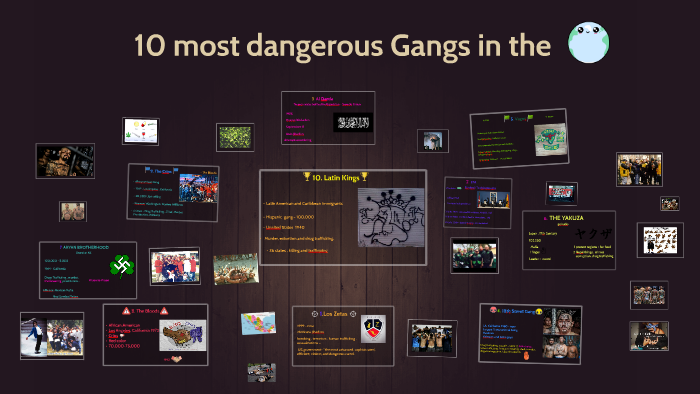
Gangs have plagued the urban and rural landscapes of America for decades, transcending mere criminal activity to symbolize a complex mosaic of culture, survival, and violence. Within this intricate dynamic, certain gangs have emerged as particularly notorious, weaving tales of allegiance, treachery, and brutality. Understanding the motivations, structure, and impacts of these gangs is essential for comprehending the broader narrative of crime in America. Below is an exploration of the ten most dangerous gangs in the United States, showcasing their distinguishing characteristics and societal implications.
1. MS-13 (Mara Salvatrucha)
Originating in Los Angeles during the 1980s, MS-13 has garnered infamy for its vicious tactics and recruitment strategies, primarily targeting young people. The gang is composed mostly of Salvadoran immigrants and has expanded its reach into several states across the U.S., including Virginia and Texas. Their modus operandi is characterized by extreme violence, often employing torture, and their motto, “mata, roba, viola, controla” (kill, steal, rape, control), reflects a ruthless philosophy that instills fear in communities. The gang’s transnational presence also creates a complex challenge for law enforcement, as their criminal enterprises span multiple countries.
2. Bloods
The Bloods gang, formed in response to the Crips, is known for its distinct red attire and a reputation that precedes it. Established in Los Angeles during the early 1970s, the Bloods engage in drug trafficking, robbery, and violent crime. The gang comprises numerous sets, each operating independently but united under the Bloods banner. Their intricate network allows them to exert control over various territories, and their rivalry with the Crips has contributed to a significant portion of urban violence. The cultural impact of the Bloods extends to music and media, often glamorizing their lifestyle while perpetuating cycles of crime.
3. Crips
Since their inception in the late 1960s, the Crips have evolved into one of the largest and most organized gangs in the U.S. Characterized by their blue clothing, the Crips have established a reputation for merciless violence and territorial disputes, particularly with the Bloods. Their decentralized structure allows for a multitude of sub-groups, which can complicate law enforcement efforts. The Crips’ criminal activities are extensive, including drug trafficking and extortion, and they have also been implicated in numerous high-profile murders. The gang’s cultural influence is pervasive, often depicted in rap music and films, perpetuating both their notoriety and allure.
4. Aryan Brotherhood
Emerging from the prison system in the 1960s, the Aryan Brotherhood is a white supremacist gang that maintains a prominent yet insidious presence in America. This gang engages in various criminal enterprises, including drug trafficking, extortion, and murder-for-hire. Their ideology is steeped in racial hatred, and they often target individuals from diverse racial backgrounds. The Aryan Brotherhood’s operations extend beyond prison walls, as they hold significant sway over certain white supremacist factions, exerting considerable influence within the realm of organized crime. Their symbol, a shamrock or the number 666, is unmistakable, marking their territory and intention.
5. Latin Kings
The Latin Kings are one of the largest and most organized Hispanic gangs in America, tracing their roots back to Chicago in the 1940s. Their ranks are filled with Latino youth who are drawn together by cultural identity and brotherhood. With a hierarchical structure, the Latin Kings engage in drug trafficking, extortion, and violent crime. Ethnicity plays a pivotal role in their recruitment, as the gang emphasizes unity among Latino communities. Their philosophy, encapsulated in their motto “La Familia,” underscores loyalty and solidarity, yet their violent confrontations with rival gangs pose dire threats to public safety.
6. 18th Street Gang
Established in Los Angeles, the 18th Street Gang is notorious for its extensive membership, primarily consisting of Latino and immigrant youth. The gang’s name references the 18th Street in Los Angeles, where it was initially formed. The 18th Street Gang is involved in various illegal activities, such as drug trafficking, robbery, and human trafficking, and has expanded its reach across multiple states and internationally. Their fierce rivalries with other gangs, including the MS-13, lead to relentless violence and lethal encounters, making them a formidable presence in urban crime circles.
7. Black Guerrilla Family (BGF)
Founded in the 1960s as a response to systemic oppression, the Black Guerrilla Family has evolved into a powerful prison gang with a vast influence on street crime across America. The BGF espouses a black nationalist ideology, advocating for social justice and radical change, yet their members engage in notorious criminal enterprises, including drug trafficking and murder. Their hidden complexity lies in the confluence of their ideological beliefs and criminal activity, creating a paradox that complicates their perception within both society and law enforcement.
8. The Sopranos
While originally a fictional representation of organized crime, groups akin to the Sopranos exist in real life, epitomizing the workings of the Italian-American mafia. In cities like New York and Philadelphia, these families are embroiled in racketeering, extortion, and various illicit endeavors, such as gambling and loan sharking. The mafia’s storied history is intricately tied to corruption and violence, as inter-family rivalries and law enforcement crackdowns add layers to their enduring legacy. The glamorization of mafia culture in media can often overshadow their very real and detrimental impact on communities.
9. Surenos
The Surenos, or “Southern” gang, are a collection of gangs that operate primarily in Southern California and in various parts of the western and central United States. Aligned with the Mexican mafia, they engage in drug trafficking, extortion, and violent crime. Often characterized by the number 13, a reference to the Mexican mafia, the Surenos exhibit a fierce loyalty to their code and their gang. Their expansive network makes them ubiquitous in regions where they exert territorial control, further complicating efforts by law enforcement.
10. Hells Angels
The Hells Angels Motorcycle Club, while primarily known as a motorcycle gang, has a long history of engaging in organized crime. Founded in the 1940s, they are infamous for their often violent encounters with rival motorcycle clubs and law enforcement. The club’s criminal activities include drug trafficking, weapons violations, and illicit trafficking operations. The Hells Angels exemplify a unique blend of camaraderie and criminality, which creates a challenging dichotomy for understanding their impact on society.
In conclusion, the landscape of dangerous gangs in America is multifaceted and continually evolving. Each gang possesses its own ethos, motivations, and methods, contributing to a broader narrative of crime and societal challenges. Understanding these gangs facilitates a deeper understanding of the crime milieu in America, highlighting the urgent necessity for innovative strategies in deterrence and community engagement. As communities grapple with the consequences of gang violence, the cycle of crime persists, underscoring an enduring struggle that remains critical to address.
FAQ
What are the most dangerous gangs in America?
The most dangerous gangs in America include MS-13, Bloods, Crips, Aryan Brotherhood, Latin Kings, 18th Street Gang, Black Guerrilla Family, Surenos, Hells Angels, and organized crime families similar to the Sopranos.
How do these gangs impact American society?
These gangs contribute significantly to urban and rural violence, drug trafficking, extortion, human trafficking, and other criminal activities, creating challenges for law enforcement and communities.
What are common criminal activities associated with these gangs?
Common activities include drug trafficking, robbery, extortion, murder, human trafficking, and racketeering.
Are these gangs connected internationally?
Yes, some gangs like MS-13 and the 18th Street Gang have transnational operations, complicating law enforcement efforts.




Leave a Reply