
Short Answer
The Earth, in its vast splendor, boasts a diverse array of landscapes, but none evoke as much intrigue, enchantment, and stark beauty as the world’s deserts. Among these arid expanses, some claim the title of the driest, where rainfall is a rarity and life’s resilience is tested to extremes. Herein lies a compilation of the top 10 driest deserts on our planet, each possessing its own unique characteristics and haunting beauty, promising a shift in perspective about life in such seemingly inhospitable environments.
1. Atacama Desert, Chile
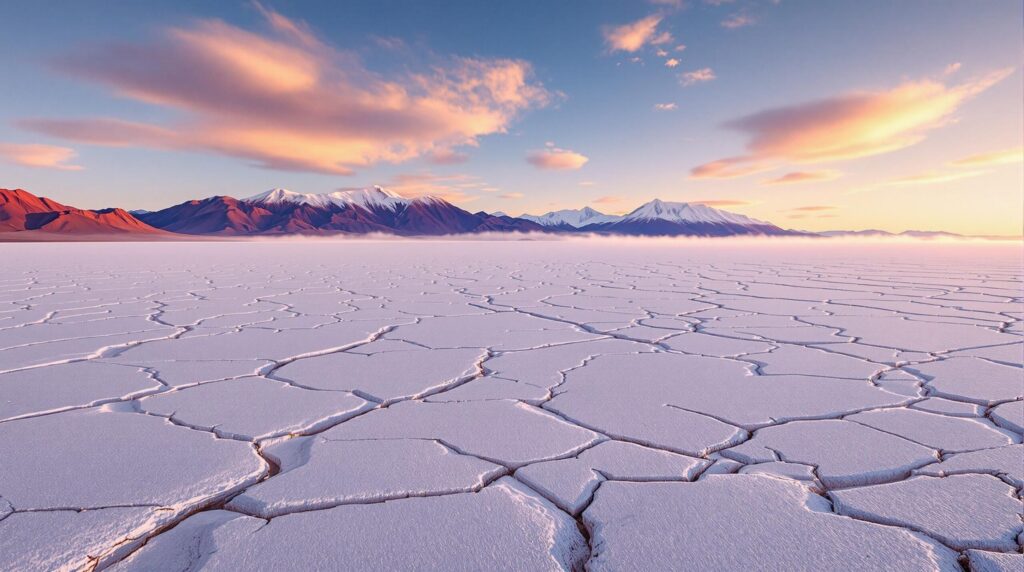
Regarded as the driest nonpolar desert in the world, the Atacama Desert receives less than 1 millimeter of rainfall annually. This coastal desert, straddling the Pacific Ocean, is characterized by its golden dunes, salt flats, and spectacular salt domes. The hyper-arid environment leads to a distinct ecosystem that supports a small but thriving population of flora and fauna, including resilient cacti and the endangered flamingo species. It also resembles Mars so closely that scientists use it as a testing ground for space missions.
2. McMurdo Dry Valleys, Antarctica
While many visualize deserts as sun-kissed and sandy, the McMurdo Dry Valleys present a stark contrast. This polar desert holds the record for the driest place on Earth, experiencing nearly zero precipitation for extended periods. The terrain, austere and glacier-bound, reveals unique mineral formations and supports extremophiles—microorganisms that thrive in harsh conditions. The valleys, with their eerie serenity, are a gateway to understanding Earth’s past climate and potential extraterrestrial life.
3. Namib Desert, Namibia
The Namib Desert, stretching along the Atlantic coastline, captivates with its majestic reddish dunes and vast gravel plains. While it may receive a meager 15 mm of rain each year, the desert is teeming with extraordinary life, including the iconic Welwitschia plant, which can live for over a millennium. The Namib’s iconic Sossusvlei area is a treasure trove for photographers, with towering dunes framed against a backdrop of endless blue skies, creating a surreal, almost otherworldly vista.
4. Algerian Sahara, Algeria
The Sahara Desert, the world’s largest hot desert, encompasses an array of environments, with certain regions in Algeria being particularly arid. Here, precipitation can be as low as 3 mm annually. The Sahara challenges both flora and fauna to adapt, resulting in unique survival strategies. Ancient rock art found in this region suggests a once-lush landscape, drawing intrigue and illuminating shifts in climatic conditions over millennia.
5. Arabian Desert, Middle East
Spanning several countries, including Saudi Arabia, the Arabian Desert experiences varying levels of aridity, but central regions can receive as little as 2.5 cm of rain annually. This sprawling expanse is emblematic of traditional nomadic cultures, flavoring its history with stories of resilience amidst shifting sands. The desert is home to breathtaking geological formations, such as the impressive Al-Ula rock formations, showcasing millennia of natural artistry.
6. Great Sandy Desert, Australia
In the heart of Australia’s northern region lies the Great Sandy Desert, averaging an amount of rainfall around 23 mm per year. Its vast stretches of red sand dunes and ghostly shrublands are haunted by rich indigenous history, where many Aboriginal tribes have thrived for thousands of years. The resilience of life here, from the feral camels to the iconic spinifex grass, showcases nature’s ability to adapt and flourish against the odds.
7. Kyzylkum Desert, Uzbekistan
Translating to “Red Sand,” the Kyzylkum Desert encompasses a staggering expanse across Uzbekistan and Kazakhstan, where rainfall is scarce, averaging about 10-15 mm per year. This desert is a duality of beauty and harshness; it is punctuated by sparse vegetation and inhabited by elusive species like the Bactrian camel, which has adapted remarkably well to its environment. The desert’s undulating sand dunes and rocky plateaus offer a stark serenity that captivates travelers.
8. Dasht-e Kavir, Iran
The Dasht-e Kavir, or Great Salt Desert, is a vast expanse of salt flats and staggering volcanic mountain ranges, located in central Iran. With rainfall around 20 mm annually, it is a hot and predominantly barren terrain. Despite its aridity, this fascinating abode boasts unique geological formations and an otherworldly beauty that has inspired poets and explorers alike. Its mirages and parched vistas evoke a deep sense of wonder.
9. Gobi Desert, Mongolia
While the Gobi Desert is often noted for its raw expanses and harsh climate, it experiences more rainfall than many of its counterparts, yet its northern regions can be stigmatized by extreme dryness, receiving less than 150 mm annually. The Gobi, notable for its stark beauty and extremes—from blistering heat in summer to frigid winter temperatures—hides a wide range of unique wildlife underneath its seemingly barren facade. It is a land rich in history, known for its connection to the Silk Road and the lost cities of ancient civilizations.
10. Chihuahuan Desert, USA and Mexico
Spanning both sides of the US-Mexico border, the Chihuahuan Desert is characterized by its diverse ecosystem, yet it faces arid realities with annual rainfall varying from 200 to 300 mm. Within its expanses thrive a range of hardy species including the iconic yucca plant and the roadrunner bird. The Chihuahuan’s profound canyons and rugged mountains beckon adventurers, unveiling a hidden world that flourishes against a backdrop of starkness.
These deserts, while collectively classified as the driest locations on Earth, reveal an unexpected depth of life and history. Each arid region challenges the assumptions of resilience, and prompts a profound reflection on the adaptability of existence. From the sun-baked dunes of the Atacama to the icy plains of Antarctica, the world’s driest deserts demonstrate a paradox of beauty amidst desolation, encouraging an exploration of the diverse facets of life in extreme conditions.
FAQ
What is the driest desert in the world?
The McMurdo Dry Valleys in Antarctica are considered the driest place on Earth with nearly zero precipitation for extended periods.
Which desert is used by scientists as a testing ground for Mars missions?
The Atacama Desert in Chile closely resembles Mars and is used by scientists for space mission testing.
How much rainfall does the Namib Desert receive annually?
The Namib Desert receives about 15 mm of rainfall each year.
Are deserts always hot and sandy?
No, deserts can be cold and icy like the McMurdo Dry Valleys in Antarctica, showing that deserts are defined by low precipitation rather than temperature.
What kinds of life can survive in the driest deserts?
Life in the driest deserts includes resilient plants like cacti and Welwitschia, endangered birds like flamingos, extremophile microorganisms, and animals such as camels adapted to extreme aridity.




Leave a Reply