
Short Answer
The world abounds with awe-inspiring landscapes, and among them stand the largest islands, the most arid deserts, and the grandest dams. Each of these geographic entities possesses a unique magnetism, captivating humans with their sheer scale, mystery, and raw power. This exploration of the largest islands, deserts, and dams offers a glimpse into nature’s grandeur and human ingenuity, while beckoning us to ponder the profound connection we share with these colossal features of our planet.
1. Greenland – The Majestic Island
Greenland, the largest island on earth, looms large on the map at an impressive area of over 2.1 million square kilometers. Encompassed almost entirely by ice, it plays host to a landscape rife with glaciers, towering mountains, and a resilient ecosystem. The haunting beauty of the Northern Lights dances across its skies, captivating visitors. However, beneath its icy exterior lies an intricate network of ancient cultures and an evolving climate that beckons researchers and adventurers alike to study its fragility.
2. Australia – The Island Continent
Australia, often dubbed the “island continent,” spans 7.7 million square kilometers, encompassing diverse ecosystems from arid deserts to lush rainforests. A rich tapestry of flora and fauna flourishes here, with unique species found nowhere else on Earth. The Great Barrier Reef, a UNESCO World Heritage Site, showcases the intricate interconnectedness of marine life. Australia’s allure lies not just in its natural wonders, but also in its rich Indigenous cultures that have thrived for tens of thousands of years, a testament to humanity’s enduring relationship with the land.
3. Sahara Desert – The Quintessential Desert
The Sahara Desert, the largest hot desert in the world, spans an astonishing 9.2 million square kilometers across North Africa. With its sweeping sand dunes, rocky plateaus, and transient oases, the Sahara embodies stark beauty. It humbles and intrigues, evoking images of ancient caravans traversing its borders. The desert’s vastness invites philosophical musings on solitude and survival, as well as the intriguing adaptations of its native flora and fauna amidst such extremes.
4. Antarctic Desert – The Icy Wilderness
Contrary to popular belief, the Antarctic Desert is the largest desert on the planet, covering an area of approximately 14 million square kilometers. Characterized by its sub-zero temperatures and glacial expanses, this frigid environment is defined more by its desolate yet breathtaking corporeality. It serves as a crucial indicator of climate change, drawing scientists worldwide to study its complex ecosystem. The stark contrast between its barren landscape and the vibrant life forms that inhabit its shores engenders a deep fascination with the resilience of nature.
5. Lake Baikal – The Ancient Reservoir
Lake Baikal, nestled in Siberia, is not only the deepest freshwater lake in the world but also hosts about 20% of the planet’s unfrozen freshwater supply. With a depth of over 1,600 meters, it transcends breeding ground; it is an ancient reservoir teeming with life and mystery. The unique species found here, including the Baikal seal, thrive in its pristine waters. The lake’s ethereal beauty, framed by mountains and forests, invites exploration, while its depth provokes contemplation about the history of earth’s hydrology.
6. The Great Wall – A Marvelous Barrier
The Great Wall of China, while not a desert or dam, is a monumental structure that spans thousands of kilometers, symbolizing the resilience and ingenuity of human endeavor. Originally constructed to protect against invasions, it now stands as a cultural relic and tourist attraction. This mingling of natural and human-made landscapes speaks to our intrinsic desire for safety and the fascinating interplay of culture and environment.
7. Hoover Dam – Engineering Excellence
The Hoover Dam, located on the Colorado River, is a prime exemplar of mid-20th-century engineering prowess, rising to a height of 221 meters. It accumulates the waters of Lake Mead, the largest reservoir in the U.S., while providing hydroelectric power to several states. The dam’s imposing façade and its role in water storage and management render it an essential feature of the American Southwest. It raises questions concerning resource management and human impact on natural water systems.
8. Atacama Desert – The Driest Place on Earth
Dubbed the driest desert globally, the Atacama stretches over northern Chile and boasts an average annual rainfall of less than 1 mm. Its otherworldly landscapes, ranging from salt flats to volcanic peaks, evoke images of Martian terrain. The Atacama’s unique climatic conditions give it an uncommon biodiversity, and its arid nature has spurred scientific endeavors, particularly in astrobiology, as researchers draw parallels between its environment and that of Mars.
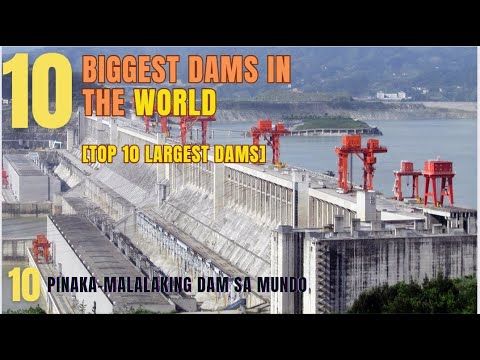
9. Three Gorges Dam – A Colossal Construction
The Three Gorges Dam on the Yangtze River is the world’s largest power station in terms of installed capacity. Stretching across 2,335 meters, this colossal structure is a testament to modern engineering’s capabilities. Though it provides flood control and hydroelectric power, it has also spurred significant ecological and cultural discussions due to the displacement of communities and alteration of natural landscapes, highlighting the complex ramifications of human ambition.
10. Madagascar – A Biodiversity Hotspot
While not a desert or dam, Madagascar is the fourth-largest island in the world. Its seclusion has resulted in an astounding degree of endemism; about 90% of its wildlife is found nowhere else on the globe. The island captivates adventurers and ecologists alike with its rainforests, unique wildlife, and indigenous human cultures. Madagascar serves as a living laboratory for evolution, reflecting humanity’s connection to the natural realm.
From islands that shelter indescribable landscapes to deserts glowing with enigmatic beauty and dams manifesting human ability, these geographic giants inspire awe and contemplation. Their grandeur offers vital lessons about environmental stewardship, the complexities of ecosystems, and the fusion of human endeavor with nature’s intrinsic genius.
FAQ
What is the largest island on Earth?
Greenland is the largest island on Earth, covering over 2.1 million square kilometers.
Which desert is the largest by area?
The Antarctic Desert is the largest desert by area, spanning approximately 14 million square kilometers.
What is significant about the Three Gorges Dam?
It is the world's largest power station by installed capacity and a major hydroelectric dam.
Why is Australia called an island continent?
Because it is a massive landmass surrounded by water, combining the characteristics of both an island and a continent.
What makes Madagascar ecologically important?
Its high rate of species endemism, with about 90% of wildlife unique to the island.




Leave a Reply