
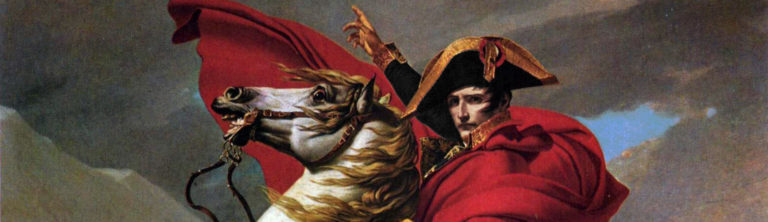
Throughout history, exceptional military leaders have emerged, each leaving an indelible mark on the world through their strategic brilliance, combat prowess, and leadership qualities. The realm of military leadership is not just about strength; it encompasses intellect, strategy, and the ability to inspire troops. Herein, we celebrate ten of the greatest military generals of all time, examining their contributions and the unique qualities that set them apart.
1. Alexander the Great
Wilting the sands of time, Alexander III of Macedon, better known as Alexander the Great, epitomizes the archetype of the military strategist. Ascending the throne at a tender age, he swiftly consolidated his power and embarked on an audacious campaign against the Persian Empire. His tactical ingenuity was evident at the Battle of Gaugamela, where he outmaneuvered a numerically superior adversary, employing the phalanx formation to devastating effect. Beyond mere battlefield victories, his psychological warfare and diplomatic acumen enabled him to integrate conquered peoples into his empire, fostering a blend of cultures that would influence generations.
2. Hannibal Barca
Regarded as one of history’s most formidable adversaries, Hannibal Barca of Carthage galvanized forces against Roman expansion. His audacious crossing of the Alps with war elephants remains a legendary feat of logistics and bravery. At the Battle of Cannae, Hannibal executed a double envelopment maneuver that captured a significantly larger Roman force, showcasing both tactical genius and a profound grasp of battlefield dynamics. His ability to adapt and employ unconventional warfare continues to be studied in military academies worldwide.
3. Julius Caesar
Julius Caesar, the consummate Roman general and statesman, forever altered the course of Roman history. His conquests, particularly during the Gallic Wars, not only expanded Rome’s territories but also solidified his reputation as a master of guerilla tactics and siege warfare. Caesar’s military campaigns were characterized by meticulous planning, bold maneuvering, and the ability to inspire unwavering loyalty among his troops. His famous phrase, “Veni, vidi, vici” embodies his swift and decisive nature, encapsulating the essence of his military prowess.
4. Napoleon Bonaparte
Napoleon Bonaparte’s ascent to power during the tumultuous era of the French Revolution marked the dawn of modern warfare. Celebrated for his innovative strategies and organizational reforms, Napoleon transformed the French military into an unparalleled force. He pioneered the use of mass conscription and the corps system, allowing for greater flexibility and speed on the battlefield. The Battle of Austerlitz is often cited as his greatest victory, showcasing his ability to deceive opponents and exploit their weaknesses with stunning effectiveness. His legacy continues to shape contemporary military thought.
5. Sun Tzu
Although not a military general in the conventional sense, the ancient Chinese philosopher Sun Tzu’s influence cannot be overstated. His opus, “The Art of War,” serves as a timeless treatise on strategy, emphasizing the importance of adaptability, intelligence, and the psychological aspects of warfare. Sun Tzu’s maxims promote the idea that the supreme art of war is to subdue the enemy without fighting, highlighting the power of deception and information. His teachings remain integral to both military and business strategies across the globe.
6. Genghis Khan
The founder of the Mongol Empire, Genghis Khan, rose from obscurity to establish one of history’s largest contiguous empires. His military strategies were indicative of a remarkable understanding of logistics and mobility. Employing cavalry tactics and highly coordinated surprise attacks, he was able to conquer vast territories rapidly. The speed and efficiency of the Mongol army, combined with Genghis Khan’s ability to foster unity among diverse tribes, is a testament to his exceptional leadership capabilities.
7. Augustus Caesar
As the first Roman Emperor, Augustus Caesar was not only a formidable military leader but also a shrewd political strategist. His military campaigns expanded the Roman Empire significantly and stabilized it after years of civil strife. Augustus pioneered the use of a professional standing army and instilled a system of provincial governance that ensured Roman control across distant territories. His reign heralded the Pax Romana, an era of relative peace and prosperity, illustrating the profound interplay between military power and governance.
8. Admiral Horatio Nelson
Admiral Horatio Nelson’s naval genius redefined maritime warfare in the late 18th and early 19th centuries. His groundbreaking tactics, notably employed at the Battle of Trafalgar, showcased his ability to lead daring and unconventional maneuvers that decisively defeated the larger combined fleets of France and Spain. Nelson’s emphasis on decisive engagement and the importance of morale among his crews helped secure British naval dominance. His legacy endures in both naval strategy and popular culture.
9. Dwight D. Eisenhower
As Supreme Commander of Allied Expeditionary Forces during World War II, Dwight D. Eisenhower exhibited extraordinary diplomacy and organizational skills. Tasked with coordinating a coalition of diverse forces, his leadership during the D-Day invasion exemplified his strategic foresight and meticulous planning. Eisenhower’s ability to forge unity among allies, combined with his comprehensive grasp of operational logistics, ultimately led to the liberation of Western Europe, marking a significant turning point in the war.
10. William Tecumseh Sherman
General William Tecumseh Sherman left an indelible mark on the American Civil War, particularly through his implementation of total war. His infamous “March to the Sea” epitomized a strategy of destruction aimed at crippling the Confederate war effort. Sherman understood the psychological impact of warfare, targeting not just enemy soldiers but also the infrastructure supporting them. His tactics have sparked considerable debate but ultimately revolutionized military strategy in North America.
In summation, the annals of military history are replete with leaders whose innovative strategies and indomitable spirits have shaped the very nature of warfare. From the calculated brilliance of Sun Tzu to the modernizing forces of Eisenhower, these ten generals exemplify the breadth of military excellence. Their legacies endure, providing timeless lessons for future generations of leaders in fields far beyond the battlefield.








Leave a Comment